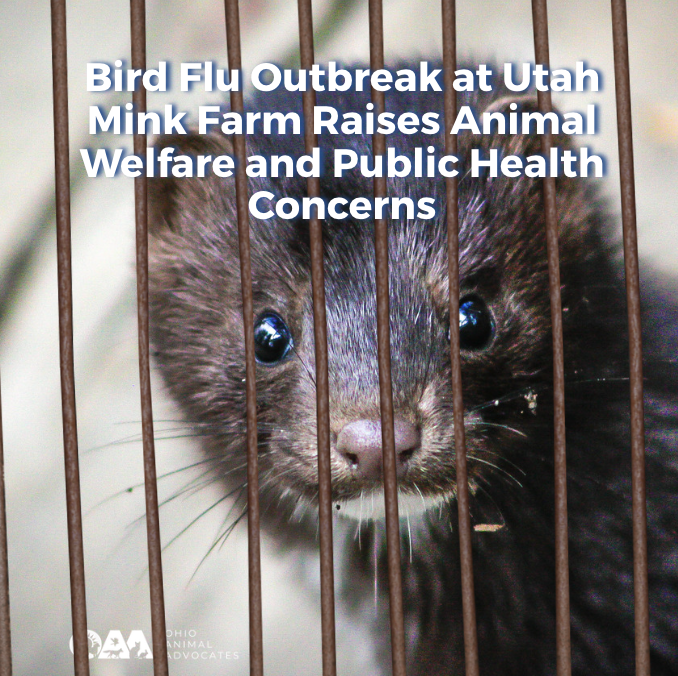
Bird Flu Outbreak at Utah Mink Farm Raises Animal Welfare and Public Health Concerns
By Kendall Jang, Staff Writer
A bird flu outbreak at a Utah mink farm is raising concerns about animal welfare, disease prevention, and the potential risks to human health.
According to a September 27 report from The Salt Lake Tribune, a mink farm in Salt Lake County is experiencing the first documented outbreak of bird flu in captive mink in the United States. The farm's owner reportedly anticipated losing up to 80% of the animals without intervention.
Lessons from COVID-19
This isn't the first time mink farms have faced a serious disease outbreak. In 2020, COVID-19 spread through 12 Utah mink farms, killing approximately 12,000 animals.
Mink are particularly susceptible to respiratory viruses, and their close confinement on fur farms creates conditions where infectious diseases can spread rapidly.
During the COVID-19 pandemic, researchers documented coronavirus transmission between humans and farmed mink, including instances of the virus spreading back to people. These findings demonstrated how animal health and human health are closely connected.
Scientists are now concerned that bird flu outbreaks in mammals could create additional opportunities for the virus to evolve, potentially increasing risks to other animals and humans. However, the Utah outbreak does not establish that the virus has become more transmissible among people.
Gaps in Disease Prevention and Oversight
Records obtained by the Animal Welfare Institute revealed that Utah agriculture officials struggled to determine how to respond to the outbreak.
Officials considered vaccination, quarantine, and euthanizing infected herds, but uncertainty surrounding federal guidance and financial assistance complicated their response.
The Animal Welfare Institute argues that the outbreak exposes significant gaps in mink farming oversight and has called for phasing out the industry while helping farmers transition to alternative livelihoods.
Animal Welfare Is Public Health
The outbreak highlights the importance of the One Health approach, which recognizes that the health of people, animals, and the environment is interconnected.
At Ohio Animal Advocates, we recognize that protecting animals also means addressing conditions that can contribute to disease outbreaks and broader public health risks.
The lessons from COVID-19 and the emerging concerns surrounding bird flu reinforce the need for stronger disease surveillance, responsible animal care, and proactive prevention measures.
Get Involved
1. Help Protect Public Health and Safety by Prohibiting the Farming of Mink Fur by completing our action alert.
2. Learn more about Wildlife Protection on our advocacy page.
3. Share this story and action alert with friends and family!
4. Subscribe to our e-newsletter to receive animal welfare related news and resources in Ohio straight to your inbox.