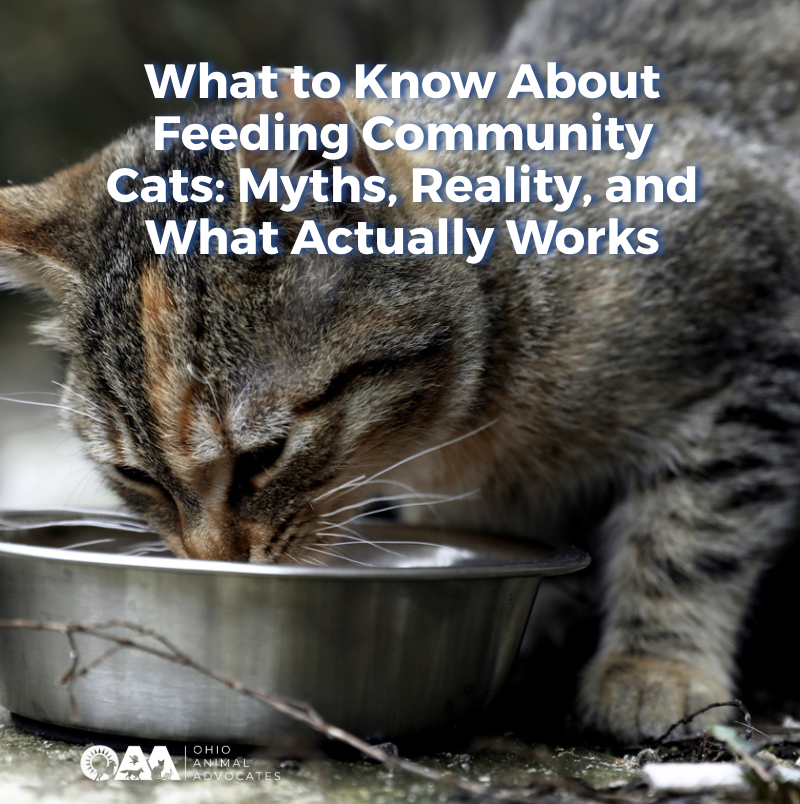
Across Ohio and the country, community cats are a visible, and often misunderstood, part of our neighborhoods. These cats didn’t appear overnight. They are the result of unsterilized populations, gaps in access to spay/neuter services, and a lack of coordinated community response.
When people step in to help by feeding outdoor cats, it can spark debate. But the truth is, feeding is only one piece of a much larger picture.
This conversation has been thoughtfully shaped by leaders in the field like Neighborhood Cats, who continue to educate caregivers and advocates on what truly works.
Let’s break down some of the most common myths and what actually works.
Myth #1: Feeding outdoor cats creates new colonies
Reality: Feeding helps manage an existing situation, it doesn’t create it.
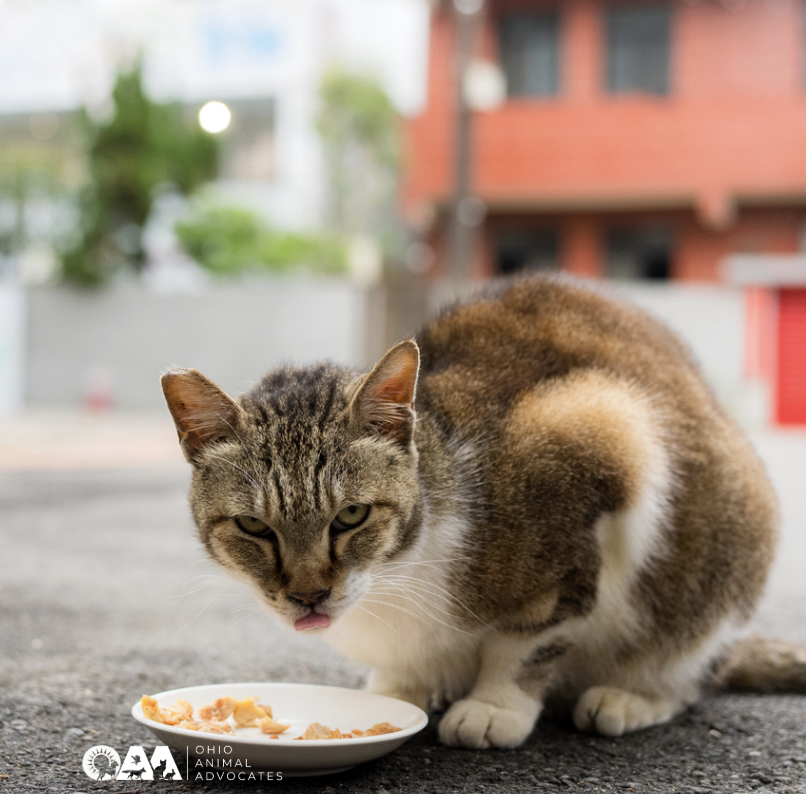
Community cats are already there because the population has not been controlled. Establishing a consistent feeding schedule actually helps caregivers and advocates implement effective solutions like Trap-Neuter-Return (TNR). When cats are fed at the same time and place each day:
Their behavior becomes predictable
They are easier to safely trap
Caregivers can temporarily withhold food to ensure successful trapping
Feeding, when done intentionally, becomes a tool and not a problem.
Myth #2: If you stop feeding, the cats will go away
Reality: Community cats are territorial and rarely relocate. Cats form strong attachments to their environment. Even if feeding stops, they are unlikely to leave. Instead, they will:
Search for alternative food sources (like dumpsters or other neighbors)
Continue living in the same area
Potentially experience increased stress and suffering
In many cases, there are already multiple people feeding the same colony without realizing it. That’s why successful community cat management includes “working the neighborhood” and connecting with other caregivers to coordinate efforts.
Myth #3: Feeding is enough
Reality: Feeding alone does not solve the problem.
While feeding helps cats survive, it does not prevent reproduction. Without intervention, populations will continue to grow, especially during kitten season.
The most effective and humane approach is Trap-Neuter-Return (TNR):
Prevents new litters
Stabilizes and gradually reduces populations
Improves cats’ overall health and behavior
Reduces nuisance concerns over time
If you’re feeding a colony, you’re already making a difference, but pairing feeding with TNR is what creates lasting impact.
Take Action
Community cats are part of our shared environment, and how we respond matters. Feeding is not the cause of the problem. It’s often the first step toward solving it. But without access to spay/neuter and coordinated community efforts, the cycle will continue. If you’re already feeding community cats, consider taking the next step:
1. Connect with local TNR resources. Check our Statewide Directory for TNR groups near you.
2. Explore resources on humane community cat management
3. Sign up for the Ohio Animal Advocates newsletter to receive updates, resources, and action alerts on issues affecting animals across the state.