By Kendall Jang, Staff Writer
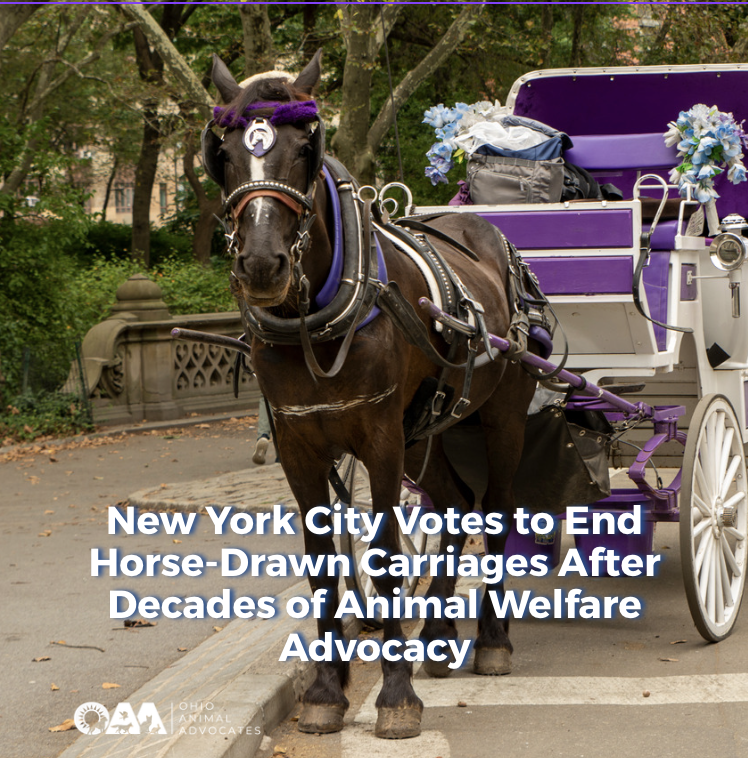
After more than two decades of advocacy, New York City has taken a historic step toward ending its horse-drawn carriage industry, marking a significant milestone for animal welfare and public safety.
On October 22, 2026, the New York City Council voted 40–7 to phase out horse-drawn carriage operations by June 2028. The legislation follows years of concerns about the safety and well-being of carriage horses navigating the city's busy streets.
The decision represents a major achievement for animal advocates who have spent decades calling for stronger protections. However, important questions remain about how the city will ensure safe futures for the horses and support workers affected by the transition.
Decades of Advocacy Lead to Change
Among the advocates who helped bring this issue to the forefront is Elizabeth Forel, president of the Coalition for NYC Animals, Inc., who has spent approximately 20 years campaigning to end horse-drawn carriage operations.
Forel began organizing in 2006 after a carriage horse named Spotty became frightened, bolted into traffic, and collided with a vehicle. The horse was euthanized at the scene.
Through public demonstrations, advertising campaigns, research, and legislative advocacy, Forel and fellow advocates continued raising awareness about the risks facing carriage horses.
Their efforts also highlighted concerns about industry oversight. An investigation reported by The New York Times in 2007 identified inconsistencies in city records documenting carriage horses. Forel later analyzed registration records and identified hundreds of horses removed from city registries between 2005 and 2013, raising questions about what happened to animals after they left the industry.
Although these records did not establish the horses' ultimate destinations, they underscored the need for greater transparency and accountability.
A Turning Point for Horses and Public Safety
The newly approved legislation is named in memory of Romanch Mahajan, an 18-year-old visitor from India who died following an incident involving a runaway carriage horse in Central Park in June 2026.
Previously known as Ryder's Law, after a carriage horse who collapsed on a Manhattan street in 2022, the legislation reflects longstanding concerns about both animal welfare and public safety.
Supporters of the phaseout argue that congested city streets present unavoidable risks for horses, pedestrians, and drivers, even when existing regulations are followed.
The legislation establishes a timeline for ending carriage operations and includes provisions intended to protect horses during the transition.
What Happens to the Horses?
While the Council's vote marks an important milestone, the work is far from finished.
The legislation requires the city to develop a transition plan by April 1, 2027, ahead of the June 2028 phaseout. The plan must address the future of carriage horses and include a workforce transition program for affected workers.
The bill also restricts certain transfers of carriage horses, including transfers for slaughter or continued use in another horse-drawn carriage business.
However, as of November 2, 2026, officials had not confirmed placements for the horses or committed funding for the transition.
Animal welfare advocates emphasize that a successful phaseout must include safe, appropriate placements, adequate resources for lifelong care, and accountability to ensure each horse's well-being.
Workers who depend on the industry for their livelihoods will also need meaningful assistance as the city transitions away from horse-drawn carriages.
A Reminder of the Power of Persistent Advocacy
New York City's decision demonstrates how sustained advocacy can bring attention to longstanding animal welfare concerns and help shape public policy.
For Ohio Animal Advocates, this development offers an important reminder of the value of grassroots organizing, public education, and legislative engagement.
Meaningful progress often takes years of dedicated work from advocates, nonprofit organizations, community members, and policymakers.
As New York moves toward implementing its phaseout, ensuring transparency, responsible horse placements, and support for affected workers will be essential to turning this legislative milestone into lasting change.
Animal welfare advocacy doesn't end when legislation passes. It continues through implementation, oversight, and a commitment to protecting the animals whose lives are affected.
Take More Action for Horses
1. You can continue to help horses by completing one or all of the following action alerts:
Enforce Rest Breaks for Animals Being Transported
Ban Dangerous Double-Deck Trailers for Horse Transportation
Protect Horses from Meat Slaughter
2. Help OAA make a difference by making a donation.
3. Share this update and your completed action alerts with friends and family!
4. Subscribe to our e-newsletter to receive animal welfare related news and resources in Ohio straight to your inbox.