
There’s a moment that happens for many people who care about animals. It’s the point where awareness shifts into something deeper—a realization that suffering isn’t distant or rare, but ongoing and often hidden within systems we don’t regularly question. A recent conversation on the Species Unite Podcast, featuring animal advocate Rose Patterson from Animal Rising, brings this tension into focus and invites a broader reflection on what it really means to take action.
For most people, compassion begins with awareness. We learn about factory farming, animal testing, or gaps in animal protection laws, and we feel concern. We may donate, adopt, or share information. But there is often a gap between caring and acting—a space where harm continues, not because people don’t care, but because they feel unsure of what to do next or whether their actions would make a difference.
When Awareness Turns Into Action
For some advocates, that gap becomes impossible to ignore.
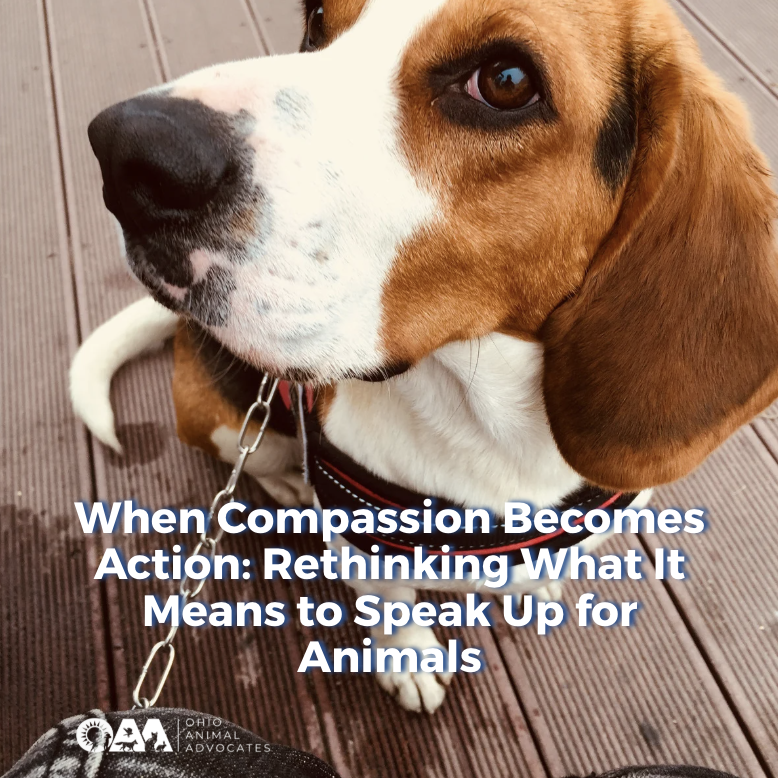
In 2022, Rose Patterson and other activists with Animal Rising openly rescued beagles from the UK’s last breeding facility for animal testing. They did so fully aware that they could face arrest and even prison time. This wasn’t a hidden operation—it was intentional, visible, and meant to expose a system that many people didn’t even know existed.
Their decision reflects a broader truth within advocacy work: when suffering is visible, neutrality becomes harder to maintain.
The Gap Between Caring and Acting
This is where advocacy takes many different forms. Some individuals focus on education, policy change, or community-based solutions. Others, like Patterson and the Animal Rising movement, take a more visible and disruptive approach. Through open rescues, investigations, and direct actions, their work is designed to bring attention to issues that are often kept out of public view. Whether or not one agrees with every method, these actions raise an important point: systems of harm often persist because they remain unseen or unchallenged.
The Systems We Don’t Question
One of the most compelling ideas explored in this conversation is how much of our inaction is shaped not by physical barriers, but by psychological ones. Many harmful systems continue because they feel too complex, too established, or too protected to question. Over time, they become normalized. When no one challenges them, they continue quietly in the background. But when someone does step forward, it can shift public awareness and create space for change.
Risk Looks Different for Everyone
Of course, not everyone will, or should, engage in high-risk forms of advocacy. But risk exists on a spectrum. For some, it may look like speaking up in a conversation, correcting misinformation, or supporting policies that improve animal welfare. For others, it may involve more public or direct forms of action. What matters most is not that everyone responds in the same way, but that awareness does not lead to inaction.
From Information to Responsibility
We are living in a time where information about animal welfare is more accessible than ever. The realities of many systems are no longer hidden in the same way they once were. This shifts the conversation from “not knowing” to “what now?” It asks us to consider how we respond when we are aware of suffering, and what responsibility comes with that awareness.
What Advocacy Can Look Like
Advocacy does not have to be extreme to be meaningful. It can take shape in everyday decisions and consistent efforts—supporting local organizations, promoting preventative care like spay and neuter, educating others, or simply choosing to stay engaged rather than turning away. Each action contributes to a broader cultural shift in how animals are treated and valued.
A Question Worth Sitting With
Ultimately, this story is not about one individual or one movement. It’s about a question that applies to all of us. When we recognize that suffering is happening, what role do we choose to play? There is no single answer, but there is a common thread: meaningful change begins when compassion moves beyond awareness and becomes action.
Get Involved
Awareness is powerful, but action is what creates change. If this story resonated with you, take the next step:
1 Listen to S13.E22: Rose Patterson: What are we willing to risk when we know suffering is happening? on the Species Unite podcast.
2. Submit an Action Alert for all the issue areas you want to speak out on.
3. Explore our advocacy programs and find where you can make an impact.
4. Stay connected. Sign up for the Ohio Animal Advocates newsletter to receive updates, resources, and action alerts on issues affecting animals across the state.