How Sustainable Pet Food Connects to Climate and Animal Advocacy
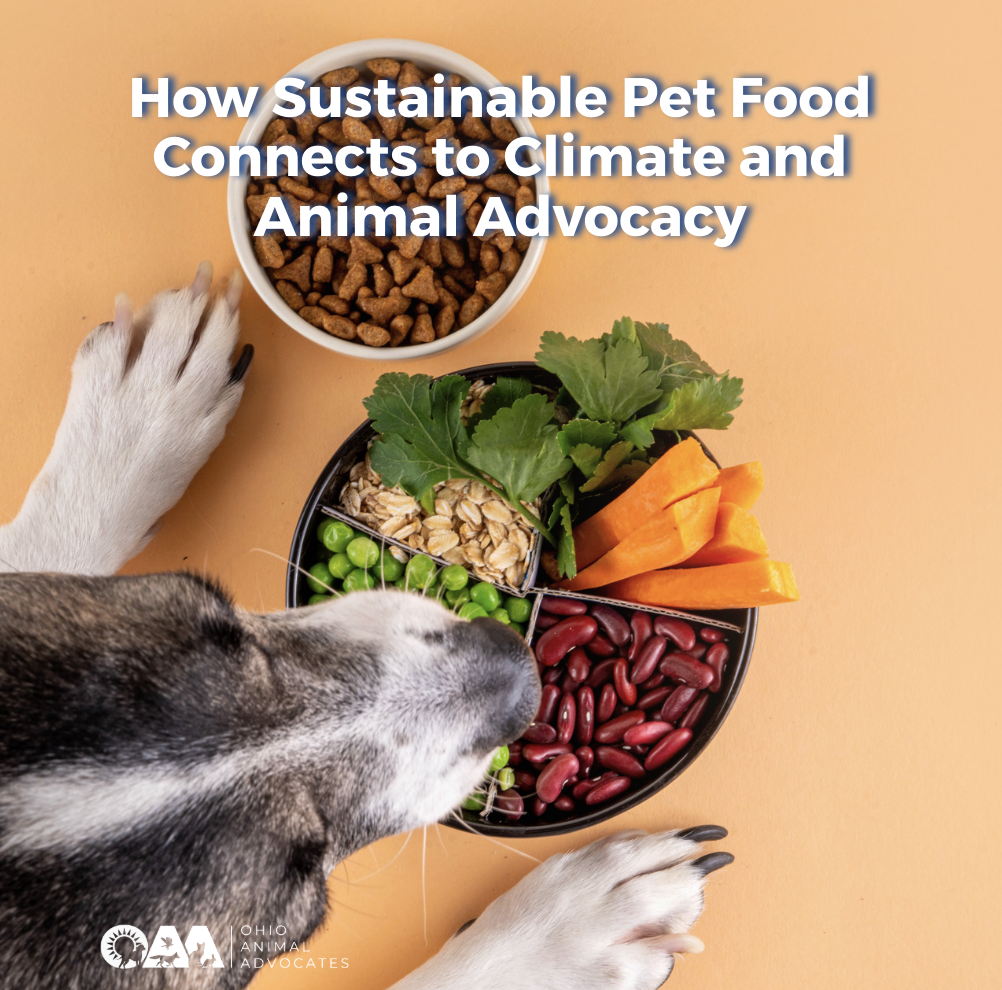

As conversations around climate change continue to grow, many people are reevaluating the impact of their daily choices, from transportation to fashion to the food they eat. Increasingly, that conversation also includes what we feed our companion animals.
A recent article published by Ohio Animal Foundation, explored the rise of sustainable pet food options, highlighting alternatives like insect-based proteins, responsibly sourced fish, regional ingredients, and upcycled food products. The article sparked an important conversation about how the products we purchase for our pets can also impact the environment, agriculture systems, and animal welfare on a larger scale.
While sustainable pet food may sound like a niche market, it reflects a much broader issue: how modern agriculture and food systems impact animals, ecosystems, and our climate.
The environmental footprint of industrial agriculture is impossible to ignore. Large-scale meat production contributes significantly to greenhouse gas emissions, water pollution, habitat destruction, and deforestation. Factory farming systems also raise serious animal welfare concerns, including overcrowding, inhumane confinement practices, and the overuse of antibiotics.
At Ohio Animal Advocates, we believe these issues are deeply interconnected.
Animal welfare advocacy does not stop at preventing cruelty cases or supporting companion animals. It also includes examining the broader systems that affect animals on a large scale — including industrial agriculture, wildlife conservation, and environmental sustainability.
That’s why OAA advocates for stronger protections for farmed animals, supports science-based wildlife conservation policies, and promotes conversations around humane and sustainable food systems.
Sustainable pet food is one example of how consumers can begin making choices that align with those values.
Some newer pet food companies are reducing waste by using upcycled ingredients, products that would otherwise be discarded during human food production. Others are exploring insect-based proteins, which require dramatically less land, water, and energy than conventional livestock agriculture while still providing high-quality nutrition for pets. Regional sourcing and recyclable packaging can also help reduce transportation emissions and environmental waste.
At the same time, experts emphasize the importance of approaching dietary changes responsibly. Cats, for example, are obligate carnivores with specific nutritional needs, and all significant diet changes should be discussed with a veterinarian. Sustainable choices should never come at the expense of an animal’s health or wellbeing.
The conversation around sustainability is not about perfection. It is about recognizing that our choices, individually and collectively, have ripple effects.
Climate change is already impacting animals across Ohio and beyond. Wildlife populations are facing habitat loss and changing migration patterns. Extreme weather events place additional strain on shelters, rescues, and companion animals. Agricultural systems are under increasing pressure from drought, disease, and environmental instability.
These are not separate issues. They are connected.
As advocates, consumers, and community members, we have an opportunity to think more critically about the systems we support and the future we want to create for animals, both domestic and wild.
Whether that means supporting humane farming reforms, protecting wildlife habitats, reducing waste, or simply learning more about sustainable pet food options, every step toward a more compassionate and sustainable future matters.
Ohio Animal Advocates would also like to thank the for publishing the original article that inspired this broader conversation around sustainable pet food, climate impact, and animal welfare advocacy.
At OAA, we will continue advocating for policies that promote animal welfare, environmental responsibility, and science-based conservation, because protecting animals also means protecting the ecosystems and communities they depend on.
Get Involved
1. Addressing the climate change impacts of animal agriculture requires a multi-faceted approach involving systemic change, advocacy, and personal choices. Learn more on our Climate Change advocacy page.
2. Subscribe to our e-newsletter to stay up-to-date on animal news in Ohio.