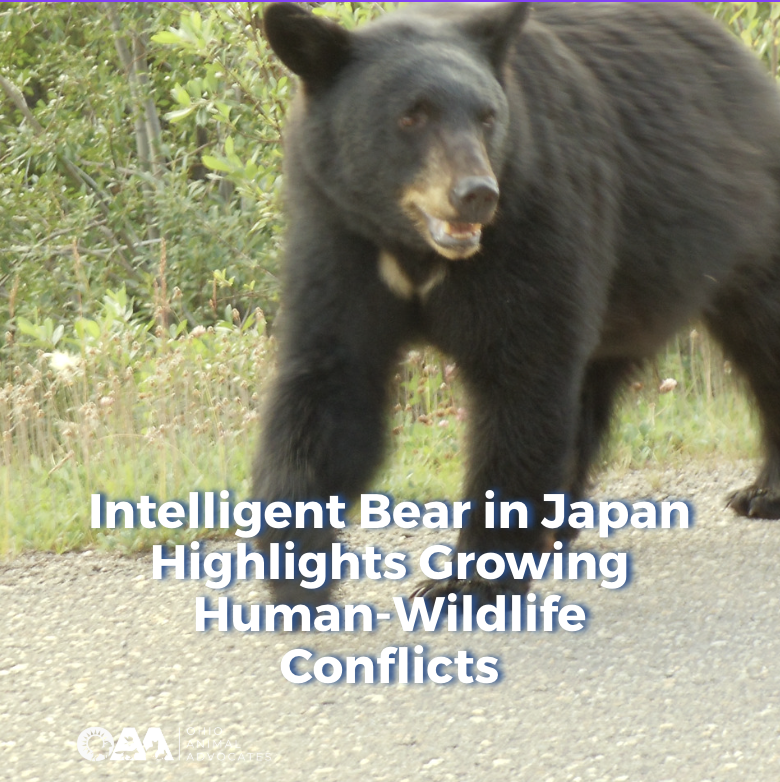
A recent incident in Fukushima, Japan has captured international attention after a bear injured four people, evaded capture, and reportedly escaped from a factory by opening a locked window from the inside. Local officials described the animal as "extremely intelligent" after it was observed turning on a water faucet to drink and apparently manipulating a window latch to escape confinement.
While the story may sound extraordinary, wildlife experts have long recognized that bears are highly intelligent animals capable of problem-solving, learning from experience, and adapting to human environments.
The incident also highlights a growing challenge facing communities around the world: increasing encounters between people and wildlife.
Why Are Human-Bear Conflicts Increasing?
Japan has experienced a record number of serious bear attacks in recent years. Experts believe several factors are contributing to these encounters, including changes in food availability, habitat pressures, climate-related disruptions, and population shifts that leave rural areas less populated by humans.
These trends are not unique to Japan. Across North America and many other parts of the world, wildlife species are increasingly navigating landscapes shaped by human development. As natural habitats become fragmented and food sources fluctuate, animals often venture closer to communities in search of resources.
Intelligence Is Not the Problem
Stories about animals displaying remarkable intelligence can sometimes lead to fear or calls for harsher management measures. However, intelligence itself is not the issue.
Bears, like many wild animals, are simply using their natural abilities to survive. Research has demonstrated that bears possess strong memories, problem-solving skills, and the capacity to learn behaviors that help them access food and navigate obstacles.
When wildlife enters human spaces, it is often a symptom of broader environmental and societal changes rather than a reflection of aggressive intent.
Promoting Coexistence
Communities can reduce conflicts with wildlife through a combination of public education, habitat conservation, secure waste management, and proactive planning.
Common recommendations include:
Securing garbage and food sources that may attract wildlife
Protecting natural habitats and wildlife corridors
Educating residents about living safely alongside wildlife
Supporting nonlethal conflict-prevention strategies whenever possible
Encouraging responsible wildlife management policies grounded in science
A Reminder of Our Shared World
The Fukushima bear story is a reminder that humans share the landscape with highly adaptable and intelligent animals. As communities continue to expand and environmental conditions change, finding ways to coexist with wildlife will become increasingly important.
Whether the animal in this case is eventually captured or relocated, the broader lesson remains the same: preventing conflict requires understanding both human and animal needs and working toward solutions that promote safety, compassion, and coexistence.
Learn More
1. Learn how OAA is advocating for protective policies and supporting conservation efforts for Ohio’s wildlife on our Wildlife Protection page.
2. Subscribe to our e-newsletter to receive animal welfare related news and resources in Ohio straight to your inbox.