Campus Cats Spark Debate at Northern Kentucky University
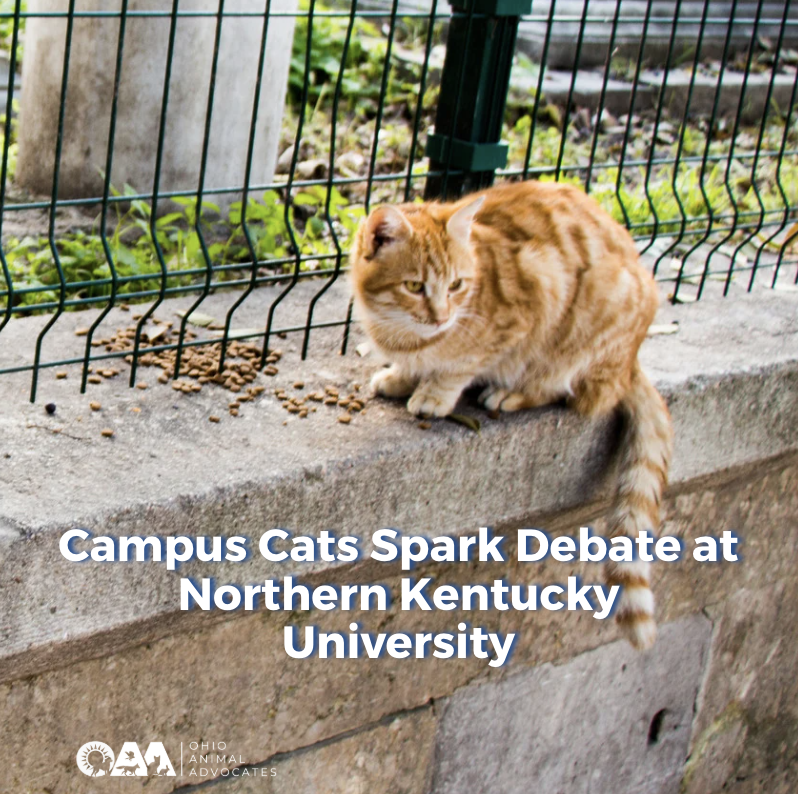
A group of cats living outside the Landrum Academic Center at Northern Kentucky University has recently become the center of an unexpected campus debate—one that highlights broader questions about how communities manage free-roaming cats.
For several years, students at NKU have been caring for a small group of cats that appeared near the building. What began with simple acts of kindness—leaving out food and water for an orange tabby named Morris—gradually evolved into a more organized effort to support the animals.
Students built shelters for the cats, including a small “cat condo” with individual rooms and heated tents for the winter months. Over time, the group of cats became known around campus as the “Landrum cats.”
For many students, the cats became a beloved part of daily life.
When Compassion Meets Institutional Concerns
Recently, university administrators announced that the cats and their shelters would need to be removed from the area.
School officials say the decision was driven by health and safety concerns, including the possibility of cat hair entering the building’s ventilation system and the potential for food left outside to attract wildlife such as raccoons.
University representatives have said they are working with students to find a solution that prioritizes both campus safety and the welfare of the cats.
In the meantime, a temporary compromise has been reached: the cats’ shelters will be moved farther from the building while longer-term plans are discussed.
Students Rally to Protect the Cats
The announcement sparked an outpouring of support from students and community members.
Students launched a Change.org petition, which quickly gathered thousands of signatures, and created an Instagram account called The Cats of NKU to share updates and photos of the campus cats.
For many students, the animals represent more than just a colony of strays.
Some have described the cats as a comforting presence during stressful academic periods, and even as emotional support during difficult times.
A Common Challenge: What Happens to Community Cats?
Situations like the one at Northern Kentucky University are not uncommon.
Across the country, free-roaming or community cats often become part of the fabric of neighborhoods, campuses, and workplaces. When conflicts arise—whether related to property management, public health concerns, or wildlife protection—communities must decide how to respond.
Animal welfare experts generally agree that humane, evidence-based management strategies are the most effective approach.
These often include:
Trap-Neuter-Return (TNR) programs to stabilize populations
Vaccination and medical care when possible
Managed feeding and shelter areas
Collaboration between caretakers, property managers, and local animal services
Programs like these can help prevent population growth while ensuring cats are treated humanely.
Additional Challenges in the NKU Case
One complicating factor in the NKU situation is that the cats are infected with Feline Immunodeficiency Virus (FIV).
FIV does not pose a risk to humans, but it can spread between cats, which makes finding adoptive homes more difficult. Because of this, many FIV-positive cats live out their lives in managed outdoor colonies or specialized sanctuary environments.
Finding Humane Solutions
The situation at Northern Kentucky University highlights an important reality: caring for community cats often requires cooperation among many stakeholders.
Students, faculty, administrators, animal welfare groups, and local governments all play a role in finding solutions that protect both people and animals.
While the future of the Landrum cats is still being determined, the conversation surrounding them reflects something encouraging: many people care deeply about treating animals with compassion.
And when communities work together, humane solutions are possible.
Get Involved
1. Sign the Save the Landrum Cats petition
2. Check out our Community Cats advocacy page to see how OAA is to supporting humane care for community cats while reducing populations and protecting local ecosystems.
3. Review our Guide for Busy Ohio Municipal Leaders on Community Cats
4. Sign up for our newsletter to receive OAA alerts and updates delivered straight to your inbox.
Update: Possible Path Toward a Compromise
According to recent reports, the university’s position may be evolving toward a more cooperative solution.
As of the most recent press coverage, Northern Kentucky University is asking that the cat shelters be moved farther away from the immediate side of the residential building and that food left out for the cats be removed after approximately one hour. These measures are intended to address concerns about wildlife attraction and building maintenance while allowing the cats to remain cared for on campus.
Both steps reflect common best practices in managed community cat programs. Limiting feeding times and placing shelters in appropriate locations can help reduce potential conflicts while still supporting the welfare of the animals.
Student organizers appear to be working constructively with the university as discussions continue. Reports suggest that a student leader has stepped forward to help coordinate the effort and communicate with administrators about responsible management of the cats.
While the details are still being confirmed, this type of collaboration—between students, campus administration, and animal welfare advocates—can often lead to practical solutions that protect both people and animals.