Assets: Sushi & Kittens; Vetsource Chart | Photos (Feline Fix by Five)
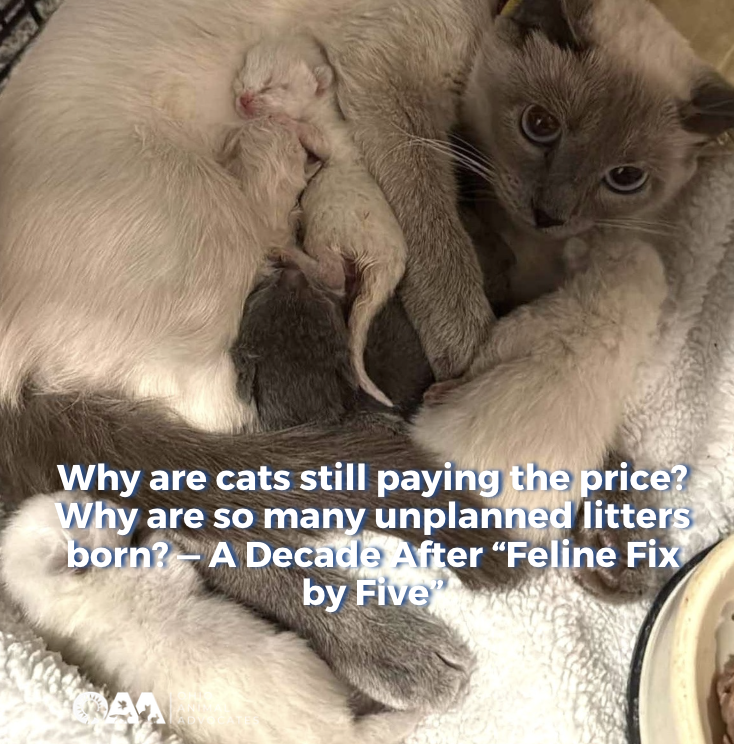
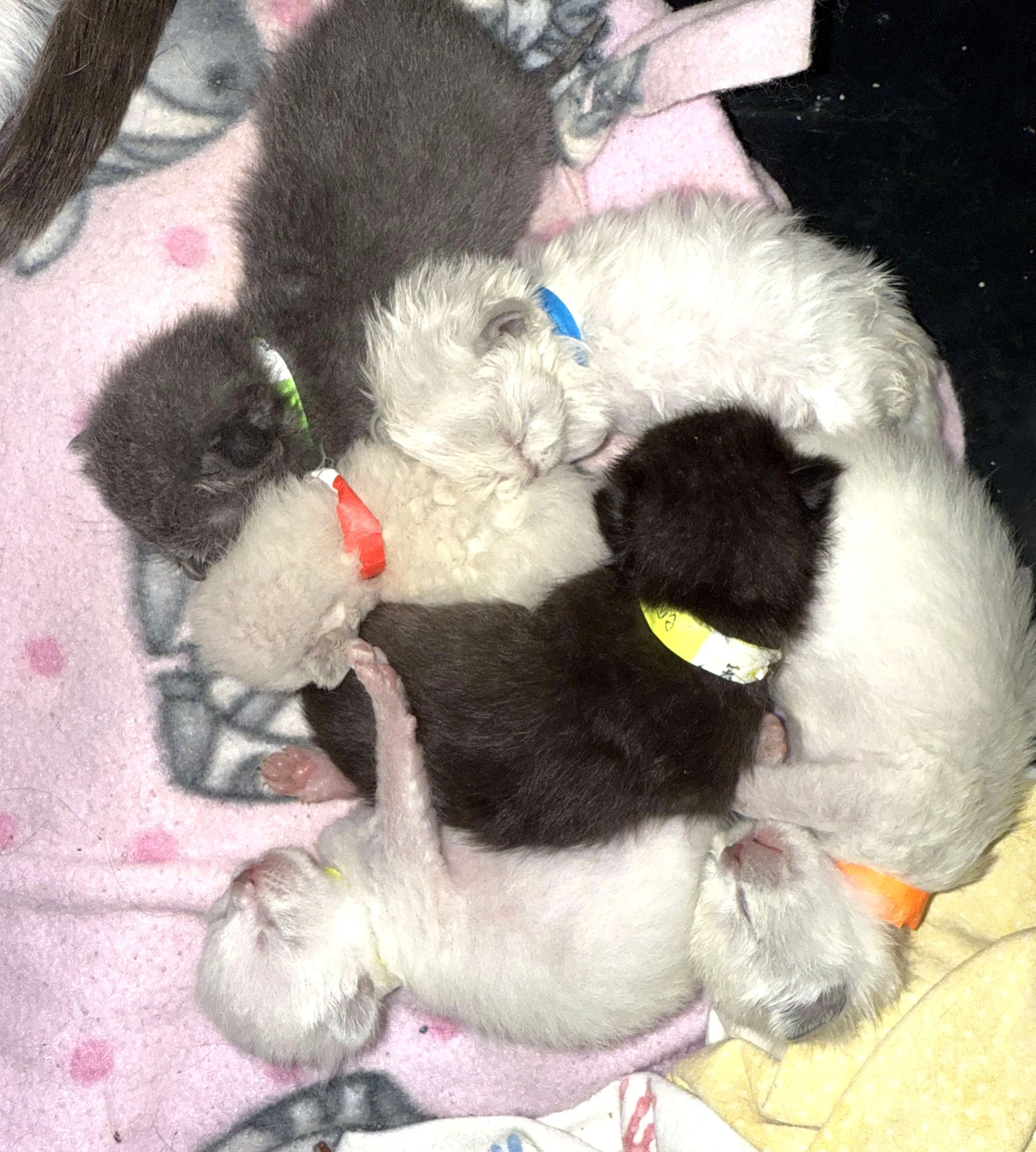
Sushi the lynx-point Siamese kitten was only four months old when she became pregnant last summer, living in the home of a cat breeder who was ultimately charged with animal cruelty in Riverton, Utah. Sushi, still a kitten herself, had a litter of seven babies when she was six months old, and six survived. Sushi was one of nearly 90 cats and kittens rescued from deplorable conditions. Nearly every female cat over four months of age was pregnant or had young kittens. Few people know that kittens can get pregnant and give birth when they themselves are still kittens.
The Feline Fix by Five campaign was founded ten years ago to encourage early-age spay/neuter for cats, according to United Spay Alliance (USA), a national nonprofit which promotes affordable, accessible, and timely spay/neuter services. Ohio Animal Advocates is the Ohio State Leader for United Spay Alliance.
In January 2016, leading veterinary organizations across North America reached a historic consensus: cats should be spayed or neutered by five months of age to prevent unplanned litters and reduce the overwhelming number of cats entering shelters or abandoned on the street. Ten years later, the results tell a troubling story.
Despite formal endorsements from the American Veterinary Medical Association (AVMA), the American Animal Hospital Association (AAHA), the American Association of Feline Practitioners (AAFP), and others, early-age spay/neuter remains far from the norm. Across the country, overwhelmed animal shelters and rescue groups remain in constant crisis —the never ending influx of unplanned litters strains resources and costs lives.
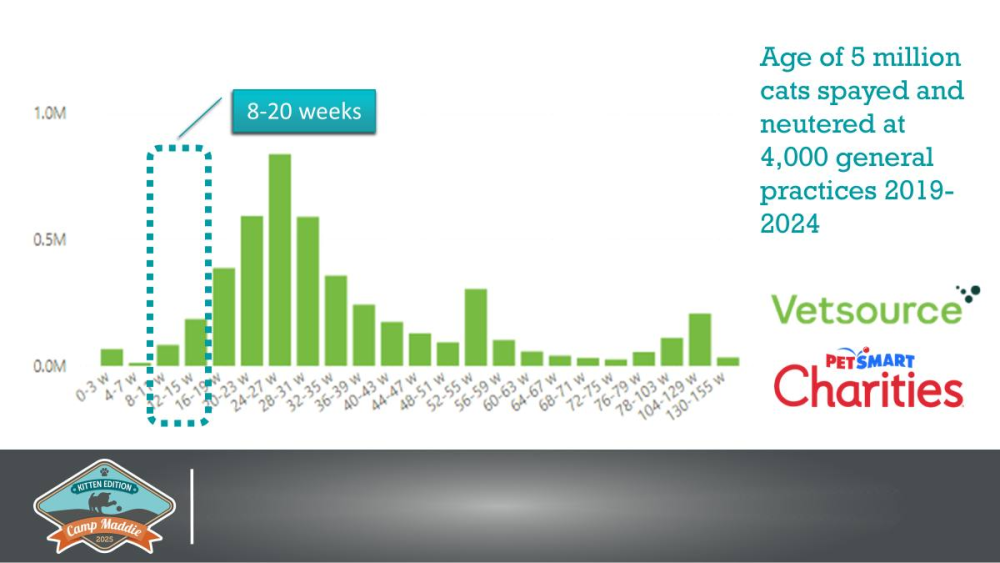
Chart shared with permission from Dr. Julie Levy. Originally shared in March 2025, based on research she is doing with private practice data compiled by Vetsource.
A recent Vetsource/PetSmart Charities study of 5 million cats spayed/neutered at 4,000 general practice clinics showed that only a tiny minority of kittens are fixed before five months of age, and most are fixed between six and nine months, well after first heat cycles and potential litters.
The original Task Force Recommendations for Best Practices, developed during a roundtable at the North American Veterinary Association meeting in Orlando, Florida, brought together veterinarians from AVMA, AAHA, AAFP, and allied organizations. The recommendations were clear, science-based, and widely celebrated.
By July 2017, AVMA had officially endorsed the guidelines, joining AAHA, AAFP, ASV, and other veterinary groups. And yet—ten years later—spay/neuter procedures are too often delayed until six months or later, and shelters and the animals continue to suffer the consequences.
“Fix by Five was never meant to be symbolic,” said Brianna Lovell Myers, United Spay Alliance Executive Director. “It was a call to action rooted in animal welfare, public health, and common sense. A decade on, the science hasn’t changed—and adoption of best practices has stalled.”
The Fix by Five tenth anniversary of the Task Force Recommendations is a milestone worth celebrating. It serves as a stark reminder that the facts are clear:
The timing matters. Many people still don’t know the best time to spay or neuter their cat and don’t realize that kittens can get pregnant much sooner than expected—often before they lose their baby teeth!
That’s why the ideal time for spay/neuter is before five months of age. United Spay Alliance provides a valuable interactive tool called the Spay/Neuter Referral Directory to help pet owners find lower-cost spay/neuter options in their area.
How You Can Make a Difference
Schedule the Appointment: If you have a kitten, book their appointment before they hit the five-month mark.
Be a Resource: Talk to your friends and family about why fixing early matters. Many people wait too long simply because they don’t know.
Share the Message: Post about Fix by Five on social media to help share the importance of early spay/neuter in your community.
Fixing your cat early significantly reduces the risk of certain cancers and eliminates many unwanted behaviors like spraying and roaming.
Shelter Animals Count released data from 2024 that showed more than half (57%) of the 2.9 million felines entering shelters were kittens under five months, representing nearly 1.7 million kittens. This means slightly more than a quarter of the total animal intake in 2024 were kittens, so intake numbers could be vastly reduced through increased spay/neuter.
Media Contact: About United Spay Alliance
United Spay Alliance (USA) envisions a future where every cat and dog has a loving home. USA works to make this a reality by championing affordable, accessible, and timely spay/neuter services. From maintaining a nationwide directory of low-cost services to fostering collaboration through the State Leader Network and empowering veterinarians with hands-on surgical training and Feline Fix by Five, USA leads with proactive prevention. In 2024, USA launched United We Spay, a podcast sharing inspiring stories from the spay/neuter movement. Learn more at unitedspayalliance.org or follow @UnitedSpayAlliance on Facebook and Instagram.
For more information:
Brianna Lovell Myers
Executive Director, United Spay Alliance
240-415-8852
brianna@unitedspayalliance.org
2. If you’re looking for accessible spay/neuter options, check our Statewide Directory for resources in Ohio.
3. Read through our Community Cats advocacy page to see other ways OAA is promoting spay/neuter and supporting community cats.
4. Sign up for our newsletter to receive OAA alerts and updates about our action alerts delivered straight to your inbox.