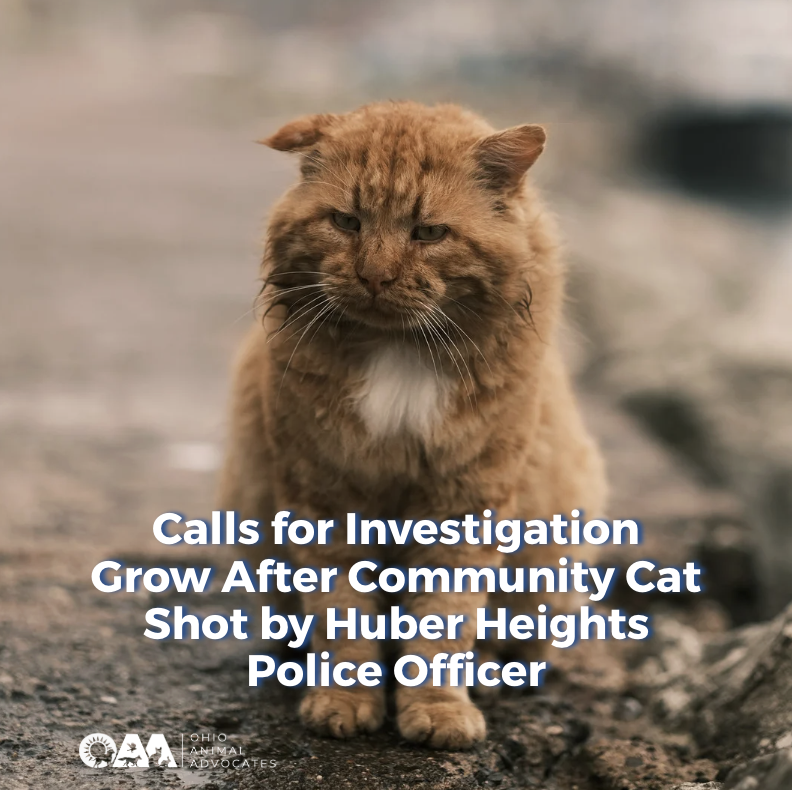
An incident involving a community cat in Huber Heights, Ohio, is drawing national attention and raising serious concerns among animal advocates about humane response protocols, accountability, and the treatment of free-roaming cats.
According to reports, on April 23, a Huber Heights police officer shot an orange tabby cat after responding to a call about an animal allegedly suspected of having rabies. The officer’s report stated the cat appeared injured, was limping, and had white foam coming from its mouth. The officer then used his service weapon to shoot the cat twice.
The incident has since sparked backlash from advocates, residents, and national animal welfare organizations, including Alley Cat Allies, which has called for a formal investigation into the handling of the situation.
Concerns Raised by Animal Advocates
Alley Cat Allies notes that while rabies is often feared, confirmed rabies cases in cats are relatively rare. Symptoms such as drooling or foaming at the mouth can also result from numerous other conditions, including injury, dental disease, poisoning, neurological illness, or trauma.
Advocates have also questioned whether lethal force was necessary at all.
According to reports from community members and advocates present at the scene, individuals were reportedly willing to assist in safely securing the cat and obtaining veterinary care. Critics argue that alternative responses should have been explored before deadly force was used.
Additional allegations from witnesses claim the cat may not have died immediately after being shot and instead fled wounded into nearby woods before later dying from its injuries. Some community members have further alleged the animal’s body was later discarded in a dumpster, though local officials have disputed portions of those claims.
In a statement reported by WDTN, Huber Heights officials stated the cat was transported to MedVet for rabies testing and that the officer acted “in accordance with policy.”
Why This Matters
Situations involving sick or injured animals can be emotionally charged and difficult for everyone involved, including first responders. However, animal welfare advocates say incidents like this highlight the urgent need for better training, clearer humane response protocols, and stronger collaboration between law enforcement, animal control, veterinarians, rescues, and Trap-Neuter-Return (TNR) organizations.
Community cats are often cared for by local residents and volunteers who monitor colonies, provide food and shelter, and seek medical attention when needed. Humane organizations across the country have increasingly emphasized non-lethal, evidence-based approaches to managing free-roaming cat populations.
The incident has also reignited conversations around how municipalities respond to animals perceived as dangerous or diseased, and whether officers are equipped with the tools, partnerships, and training necessary to handle these encounters humanely.
Calls for Transparency and Accountability
Alley Cat Allies has reportedly contacted both the mayor and local prosecuting attorney requesting a formal investigation into the incident, along with greater transparency regarding what occurred.
A public action campaign has also been launched encouraging residents and advocates to speak out and request accountability.
At Ohio Animal Advocates, we believe all animals deserve humane treatment and that communities benefit from compassionate, evidence-based responses to animals in distress. Incidents like this underscore the importance of education, collaboration, and proactive animal welfare policies that prioritize both public safety and humane care.
As this situation continues to develop, many advocates are calling not only for answers, but also for long-term solutions that help prevent similar tragedies in the future.
Get Involved
1. We provide resources and build partnerships to humanely care for community cats while reducing populations and protecting local ecosystems. Learn more on our Community Cats advocacy page.
2. Subscribe to our e-newsletter to stay up-to-date on animal news in Ohio.