
A proposed constitutional amendment moving through the Ohio legislature is raising serious questions among wildlife advocates, legal experts, and even longtime hunters. Senate Joint Resolution 8 (SJR 8) would add the right to “hunt, fish, and harvest wildlife” to the Ohio Constitution — elevating these activities to protected constitutional rights.
Supporters describe the measure as a way to preserve Ohio’s hunting heritage and protect outdoor traditions from potential future restrictions. Opponents, however, argue that hunting and fishing are already legal and well-regulated in Ohio, making the amendment unnecessary and potentially harmful.
One of the biggest concerns centers around the amendment’s vague language. The proposal protects the use of “traditional methods” of hunting and fishing but fails to define what those methods are. Critics warn this ambiguity could open the door to protecting controversial practices such as trapping, baiting, or hounding under the Ohio Constitution.
Former Ohio assistant attorney general and Ohio Animal Advocates’ Executive Director, Vicki Deisner, strongly criticized the proposal during testimony, stating:
“The language that the resolution seeks to add to the Constitution is poorly drafted, not legally drafted.”
Deisner also warned that the amendment’s use of the phrase “traditional methods” may intentionally avoid directly naming controversial practices like trapping while still providing them constitutional protection. She argued voters deserve transparency about what exactly could become protected under the amendment.
Another debated phrase designates hunting and fishing as the “preferred means” of wildlife management. Wildlife advocates and legal experts argue this could undermine science-based conservation strategies currently used by the Ohio Department of Natural Resources (ODNR), including habitat restoration, disease management, and non-lethal wildlife control methods.
Deisner additionally raised concerns about how the amendment could impact wildlife law enforcement and future conservation efforts, questioning whether constitutional hunting rights could complicate efforts to protect vulnerable species or manage ecological crises.
Opponents also worry the amendment could create legal confusion surrounding wildlife enforcement and local authority. Questions remain about how constitutional hunting rights could impact poaching prosecutions, wildlife population management, or local governments’ ability to respond to ecological challenges.
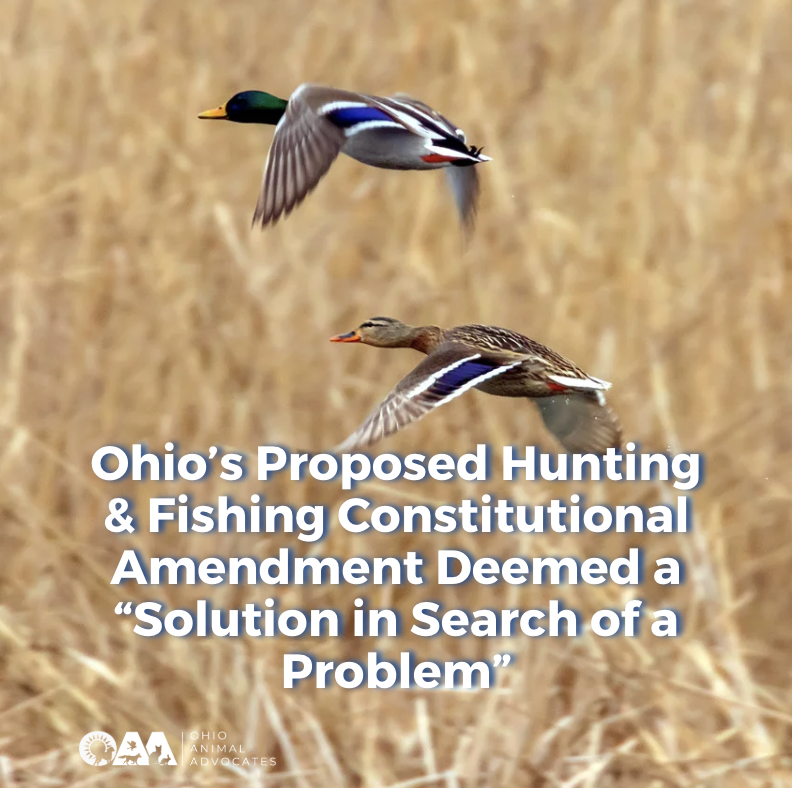
Notably, testimony on the bill has leaned heavily against the proposal, with far more opponents than supporters appearing during hearings. Critics have repeatedly described the measure as “a solution in search of a problem,” noting there is currently no active threat to hunting or fishing rights in Ohio. Even former wildlife officials and lifelong hunters have questioned the need for the amendment.
At the same time, several national organizations have heavily supported the proposal, raising concerns about outside influence shaping Ohio’s constitution and wildlife policies.
The growing opposition to SJR 8 has also received recent media attention. A recent article published by highlighted concerns raised by wildlife advocates, former wildlife officials, legal experts, and hunters who question the necessity and potential consequences of the amendment.
The article further reinforced concerns that the proposal is “a solution in search of a problem,” while also showcasing testimony and perspectives from organizations and individuals speaking out against the amendment. We encourage Ohioans to read the article to better understand the broader conversation surrounding SJR 8 and the concerns being raised across the state.
Ohio Animal Advocates believes wildlife policy should remain grounded in science, transparency, and responsible stewardship — not vague constitutional language that could have unintended consequences for animals, ecosystems, and future wildlife management decisions.
As this proposal continues through the legislature, Ohioans deserve clear answers about what this amendment would truly mean for wildlife, conservation, and public accountability.
Get Involved
1. Submit an action alert to your legislator toOppose The "Right to Hunt" Amendment
2. We promote coexistence with Ohio’s wildlife by advocating for protective policies at the state and local level and supporting conservation efforts. Learn more on our Wildlife Protection advocacy page.
3. Subscribe to our e-newsletter to stay up-to-date on animal news in Ohio.