By Maria Petkovic, John Glenn Intern
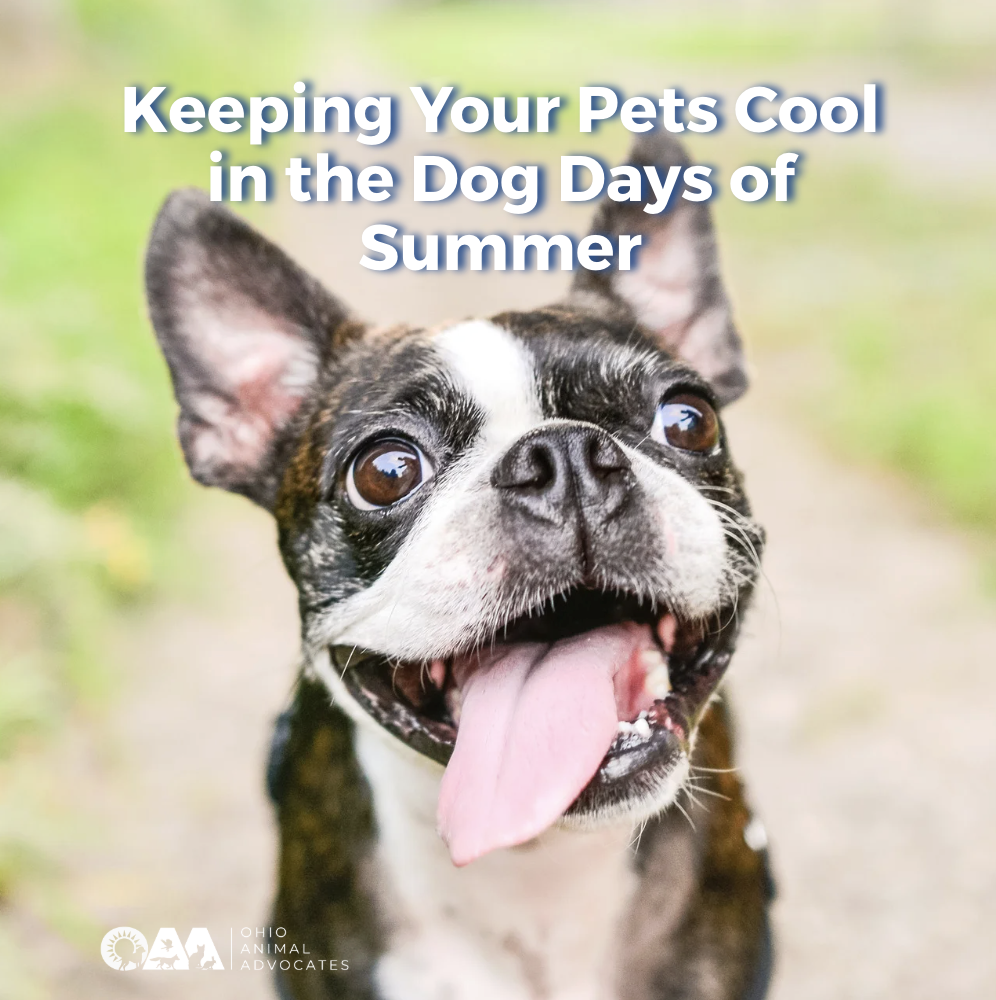
The Dog Days of Summer are the hottest of the year, and a time when it’s especially important to keep your dogs and other animals cool. As Ohio, and the United States, experience all-time high temperatures and extreme heat advisories, pet owners may struggle to ensure that their animals stay healthy and happy amidst the hot weather.
Keeping your pets cool can be a challenge, especially because animals like cats and dogs do not sweat through their skin in the same way as humans. Additionally, their fur traps heat while also blocking cool air from hitting their skin.
Some types of cats and dogs are more susceptible to heat stroke: these include breeds with flat faces (Pugs, Bulldogs, Persian Cats) that have difficulty breathing, overweight pets, and very young or very old pets.
All of these factors make it essential for pet owners to be diligent in the measures they take to prevent heat stroke. Here are some ways to keep your furry friends from overheating recommended by the ASPCA and the American Red Cross!
Pets should always have access to cool, fresh water. Adding ice cubes can be a refreshing way to keep it cold.
Try to limit time pets spend in the heat. Make sure there are shaded areas where they can relax during the daytime, and try to take pets for walks early/late in the day when the sun is less intense. Fans are also a great way to keep them cool inside.
When walking your pets, first check the temperature of the pavement. A good rule of thumb to follow is that if the pavement is too hot for you to hold your hand against it, it is too hot for your dog’s paws.
If you have cats that spend much of the day outside, consider keeping them indoors in extreme temperatures.
Animals should not be left alone in hot cars. They can be deadly, as a car’s temperature can rise nearly 20 degrees in 10 minutes, even if the window is open.
Fireworks can be scary and disorienting to animals. Avoid setting them off at your home and make sure pets are kept inside at times where they may be heard outside.
Power and HVAC outages due to extensive strain on the power grid and air conditioning units also make it difficult to protect your animals. However, there are still measures you can take to help them:
Move animals into the coolest room of your home, such as a basement or shaded area.
Try to lower their body temperature by placing damp towels on their neck, paws, or belly.
Continue to provide them with fresh water, using ice cubes if you have them available.
For people taking care of outdoor community cat colonies, there are still things you can do to keep them healthy outside. While these cats are resourceful, and find ways to survive each season, giving them some extra help can help them stay comfortable. Neighborhood Cats, a nonprofit organization focused on improving the lives of free-roaming, feral, and stray cats gives some easy ways to do this that include:
Keeping water constantly available. Water should also be changed frequently to prevent bacteria growth, especially in the heat; twice a day is ideal. Additionally, bowls should be washed frequently and be made out of materials that will not get scratches that can harbor harmful bacteria.
If there is not much shade available for cats, create some with fabric that can be hung up outside to give cats a break from the sun.
Work to establish a feeding routine for cats to avoid food being left out too long and potential spoiling.
If trapping cats, try to stick to the cooler hours of the day where the sun is low, as to not stress them out as much.
If you see your animal exhibiting signs of heatstroke, it is your responsibility as a pet owner to move them to a cooler area and seek veterinary care as soon as possible. According to the Cornell College of Veterinary Medicine, these signs include:
Heavy panting
Drooling
Bloody diarrhea
Vomiting
Weakness
Confusion
Seizures
Collapse
Heatstroke, a medical emergency, can be very dangerous, and potentially deadly, so it is extremely important to seek care for animals who exhibit these symptoms.
Take Action
1. If you are seeking care for animal exhibiting heat related symptoms, you can find a companion animal veterinarian near you on our Statewide Directory.
2. Want to help increase access to veterinary care? Submit an action alert for H.B. 664, which would allow registered veterinary technicians (RVTs) to perform additional preventative and routine care items to all dogs and cats in Ohio.
3. For more information, visit our Adequate Shelter advocacy page.
4. Share this story and action alert with friends!
5. Subscribe to our e-newsletter to receive animal welfare related news and resources in Ohio straight to your inbox.