
By Kendall Jang, Staff Writer
Artificial intelligence is opening new doors in wildlife research, and one team of scientists is using it to better understand how wild monkeys think.
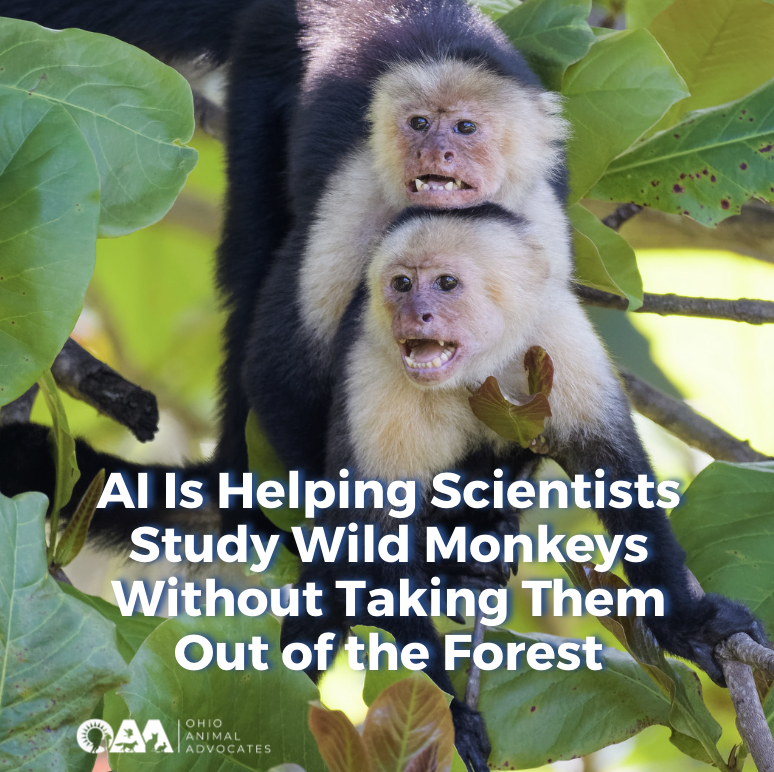
Researchers from Emory University recently introduced CapuchinAI, a portable testing station that combines a touchscreen, facial recognition software, and an automated food dispenser to study the cognitive abilities of white-faced capuchin monkeys living in Costa Rica's Taboga Forest Reserve.
Using AI-powered facial recognition, the device detects when a capuchin approaches and presents a simple learning task. If the monkey touches the screen, it receives a small piece of dried banana as a reward. During the pilot study, 10 of 16 capuchins learned the association, and at least eight remembered the task during future visits.
The research team plans to expand the project with more advanced facial recognition capable of identifying individual monkeys. Future tests will evaluate skills such as impulse control, memory, and cognitive flexibility while allowing researchers to track each monkey's progress over time.
Unlike traditional laboratory studies, this technology enables scientists to study cognition in animals living in their natural environment. Researchers hope it will help answer important questions about how intelligence influences survival, social behavior, and adaptation to challenges like drought or changing food availability.
At the same time, this research highlights an important balance. AI can be a powerful tool for conservation, but the rapid growth of energy-intensive AI data centers has also raised concerns about electricity use, water consumption, and greenhouse gas emissions. As climate change continues to threaten wildlife and habitats around the world, using AI responsibly — and investing in cleaner, more sustainable technologies — will be essential to ensuring that innovations designed to help animals don't unintentionally contribute to the environmental challenges they face.
Projects like CapuchinAI show how thoughtfully applied technology can deepen our understanding of wildlife while reminding us that conservation and sustainability must go hand in hand.
Take Action
1. You can help prioritize non-animal methods in research and testing by submitting an action alert for H.R. 1291, or Humane and Existing Alternatives in Research and Testing Sciences Act of 2025 (also known as the HEARTS Act of 2025).
2. For more information, visit our Animal Testing and Climate Change advocacy page.
3. Share this story and action alert with friends!
4. Subscribe to our e-newsletter to receive animal welfare related news and resources in Ohio straight to your inbox.