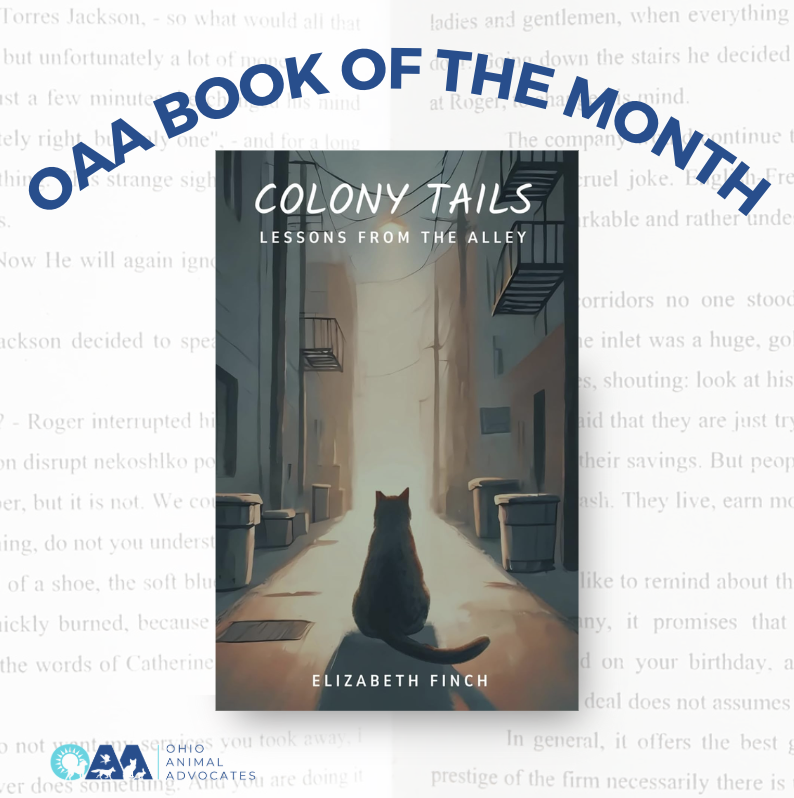
Elizabeth Finch’s Colony Tails: Lessons From the Alley is a tender, story-driven window into community cat life—told with the kind of quiet honesty that doesn’t sensationalize suffering, but also doesn’t look away from it. Rather than presenting colony management as a checklist or a debate, Finch centers what often gets lost in public conversation: the lived experience of outdoor cats and the complicated, deeply human relationships that form around them.
Structured as a series of short stories, the book brings readers into the rhythms of alley life—food insecurity, weather, territorial dynamics, injury, loss, and the constant calculation of risk. But it’s not a bleak read. What makes Colony Tails stick is the balance: hardship is real, yet so are the moments of safety, curiosity, play, and connection. Finch captures those “small wins” that community cat caretakers recognize instantly: a cat who finally eats while you’re still nearby, a new face who shows up regularly enough to plan trapping, a wary pair that chooses to share space instead of fight.
One of the book’s strongest through-lines is trust—how rare it is, how slowly it’s built, and how meaningful it becomes when it happens at all. Finch doesn’t romanticize feral behavior into something it isn’t; instead, she treats trust as a spectrum. Some cats move closer to humans. Some never do. And that’s okay. The message is less “every cat becomes a lap cat,” and more “every cat deserves stability and care.” That perspective quietly reinforces what many advocates try to communicate every day: compassion isn’t measured by cuddliness.
The caretaker presence in the book (often felt even when not foregrounded) also matters. These cats aren’t saved by a single dramatic rescue moment; they’re supported through consistency—food, observation, patience, boundaries, and the everyday choice to keep showing up. In that way, Colony Tails is a gentle but powerful defense of community-based caregiving and the people who do it.
Style-wise, the short-story format makes this an easy pick-up-and-read book—perfect for busy schedules or attention that comes in bursts. Each story functions like a vignette, offering a distinct emotional beat while contributing to a broader understanding of colony dynamics.
If there’s a “critique,” it’s really more of a note about fit: readers looking for a policy-heavy TNR primer or step-by-step how-to manual may find this more reflective than instructional. But for advocates, volunteers, and cat-loving readers who want to feel why this work matters—and be better able to explain it to others—this book is a gift.
Who should read it:
Community cat caretakers (you’ll feel seen)
Shelter/rescue staff and volunteers (great empathy-builder)
Supporters who want to understand why TNR and colony care matter
Anyone who loves cats and wants a more truthful, compassionate perspective on outdoor life
How to Help Community Cats in Your Area
1. Check out our Community Cats advocacy page for local, state, and regional summits, and partnerships to humanely care for community cats while reducing populations and protecting local ecosystems.
2. Looking for low-cost spay/neuter services in Ohio? Visit our Statewide Directory for more information.
3. Subscribe to our newsletter for updates about protecting Ohio’s community cats.