NIH Continues Funding Painful Cat Experiments Despite Pledge to Phase Them Out
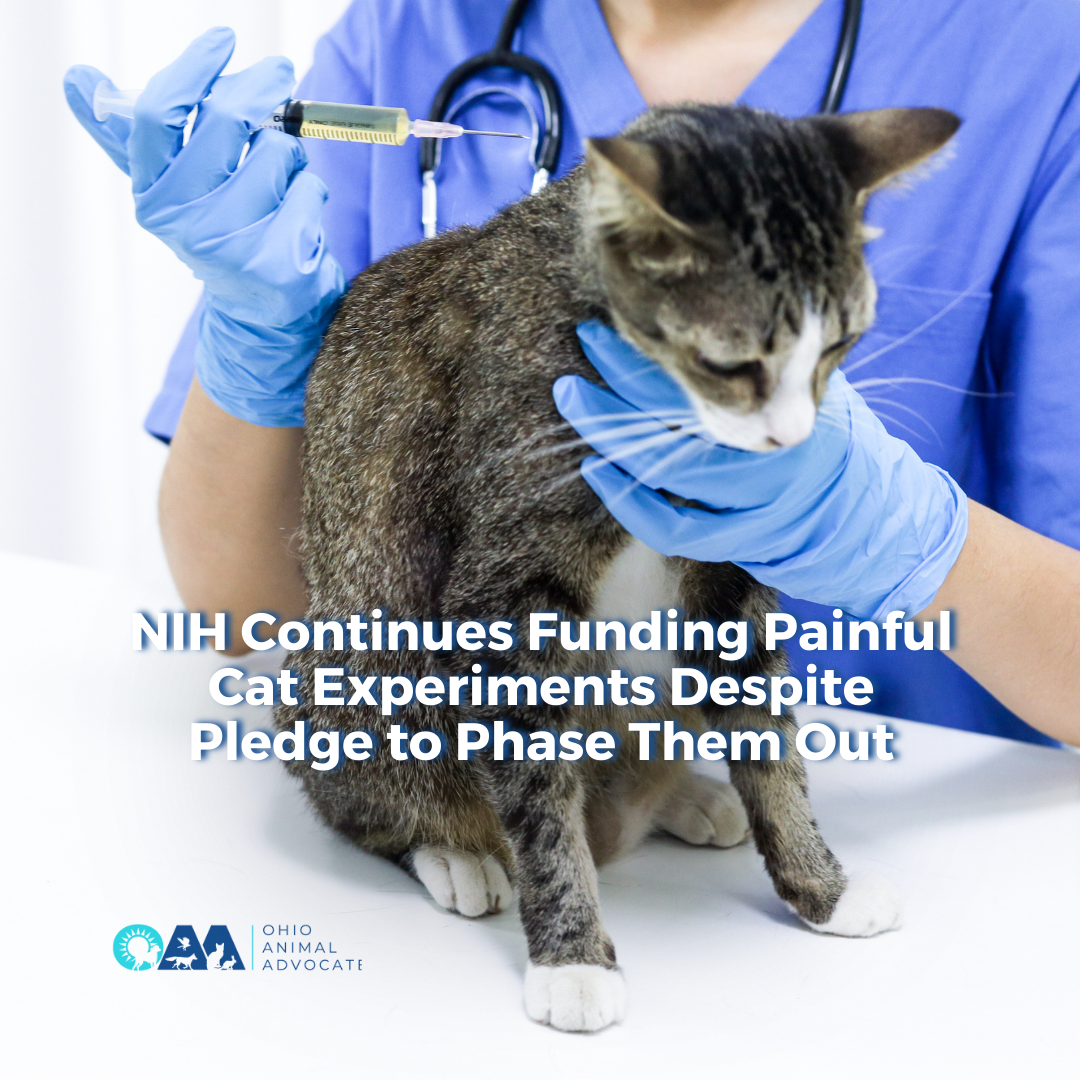
Despite public commitments to reduce and eventually end experiments on cats and dogs, new reporting reveals that the National Institutes of Health (NIH) continues to fund invasive and painful laboratory experiments on cats.
According to a December 2025 investigation by The Guardian, watchdog group White Coat Waste uncovered more than $1.7 million in new or extended NIH grants for cat experiments awarded months after senior NIH leadership said they were working to phase such research out.
Promises vs. Reality
In July 2025, NIH leadership publicly stated that experimenting on cats and dogs was “unconscionable” and that the agency was working behind the scenes to end these practices. At the time, officials claimed they were legally constrained from terminating existing grants.
However, White Coat Waste reports that NIH policy does not require continued funding beyond current budget periods — meaning these grants could have been ended or allowed to expire.
Instead, NIH:
Issued new grants for cat experiments involving induced strokes, genetic disorders, and neurological injuries
Extended at least seven ongoing cat studies
Continued funding projects with total lifetime costs nearing $38 million
A Growing Federal Shift Away From Animal Testing
This continued funding stands in contrast to broader federal trends. In recent years:
The Food and Drug Administration has begun phasing out animal testing requirements for certain drugs
Congress directed the Department of Veterans Affairs to end research on dogs and cats by 2026
The U.S. Navy halted cat and dog experiments following public exposure
The CDC has instructed scientists to phase out monkey studies
Newer, human-relevant methods — including organ-on-a-chip technology, computer modeling, and human data — are increasingly recognized as more ethical and more effective for predicting human health outcomes.
Why This Matters
NIH is the world’s largest public funder of biomedical research, spending an estimated $20 billion annually on animal research. Millions of animals are used in U.S. laboratories each year — including thousands of cats.
At Ohio Animal Advocates, we believe taxpayers deserve transparency and accountability when public dollars fund research that causes significant pain or distress — especially when humane, scientifically advanced alternatives exist.
Cats are companions. They are family members. And growing evidence shows they do not need to suffer in laboratories for science to move forward.
Take Action
Sign our Support Prioritizing Non Animal Methods of Testing and Research action alert.
Visit our Community Cats advocacy page to learn how we protect cats through humane, science-based policies
Together, we can support research that protects both human health and animal welfare.