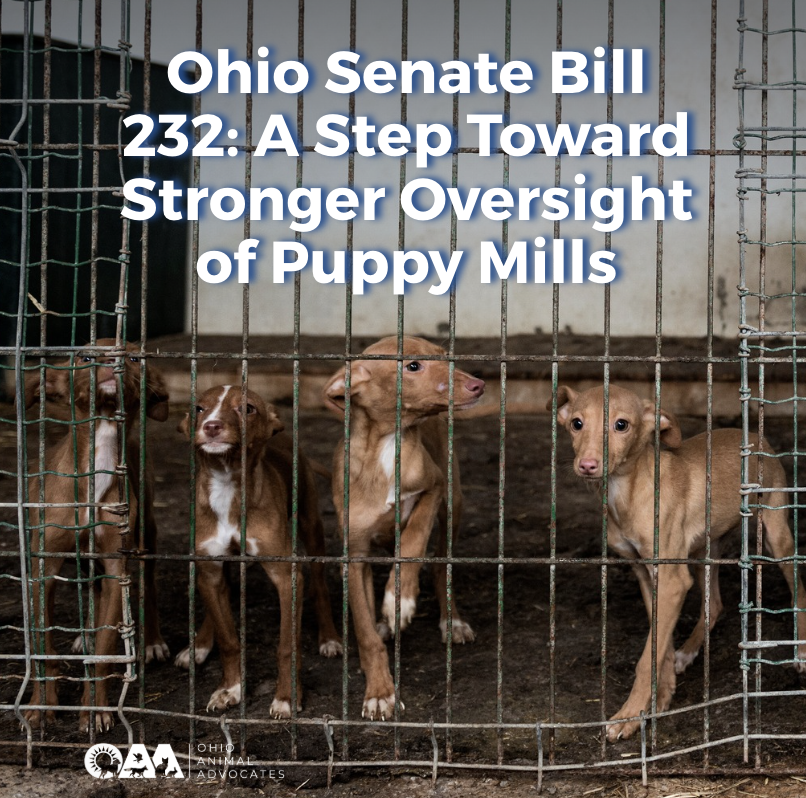
Ohio has long faced scrutiny for its commercial dog breeding industry. According to recent reporting, the state ranks second in the nation for violations at dog breeding facilities, a statistic that continues to raise serious concerns among animal welfare advocates.
In response, State Senator Casey Weinstein has introduced Senate Bill 232, a proposal aimed at strengthening oversight, improving animal care standards, and closing gaps in current law.
Why This Bill Matters
For years, advocates have pointed to weaknesses in Ohio’s oversight of large-scale breeding operations. One of the most concerning issues: Inspections are often announced in advance.
This means facilities may have days to temporarily fix or conceal violations before inspectors arrive—creating a system where compliance on paper does not always reflect real, day-to-day conditions for animals.
Senate Bill 232 directly addresses these concerns by proposing more meaningful and consistent oversight.
What Senate Bill 232 Would Do
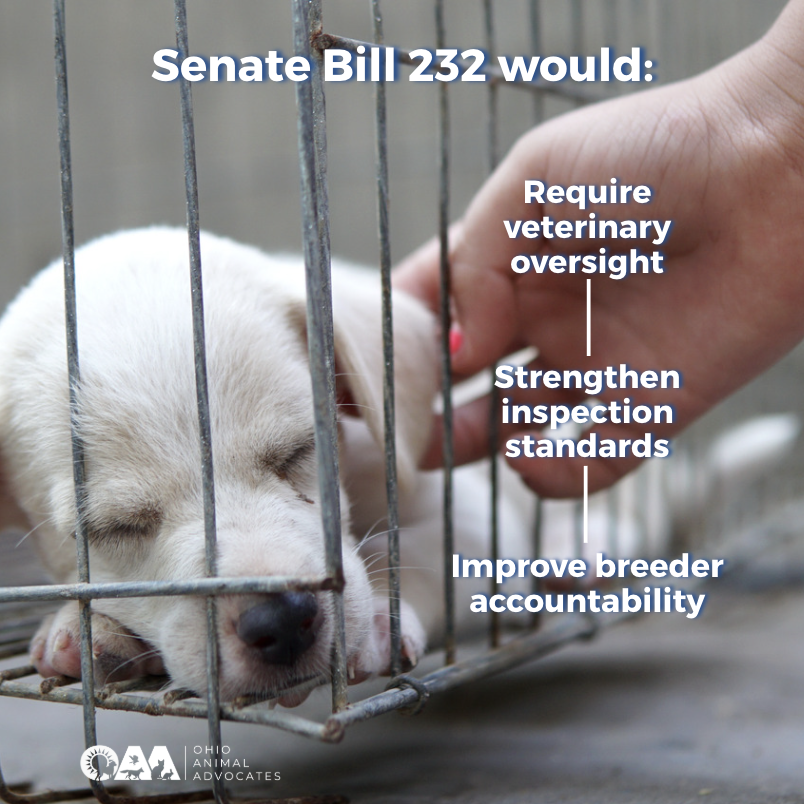
The bill introduces several important reforms to improve accountability and animal welfare in breeding facilities:
Veterinary Oversight Requirements
The bill would require greater involvement from licensed veterinarians, particularly when it comes to medical procedures and care.
This is a critical step toward ensuring that dogs in breeding facilities receive appropriate treatment—not just minimal compliance.
Improved Identification of High-Volume Breeders
Rather than relying on fluctuating numbers like litter counts, the bill looks at breeding dogs over time as a more stable way to define high-volume operations.
This change helps ensure that large-scale breeders are properly monitored and regulated.
Stronger Inspection Standards
While details are still being refined, the bill aims to address current inspection practices—especially the issue of advance notice, which has long undermined the effectiveness of enforcement.
The Ripple Effect on Shelters and Communities
The impact of puppy mills does not stop at the breeding facility. Dogs who come from neglectful or inhumane conditions often:
Require extensive medical care
Struggle with behavioral challenges
Take longer to place in adoptive homes
This places additional strain on shelters and rescues, many of which are already operating at or beyond capacity.
As Kristin Branagan of the Humane Society of Summit County noted, improving conditions at the source can make a meaningful difference for animals across the entire system.
A Bipartisan Opportunity for Progress
Encouragingly, Senate Bill 232 has bipartisan support, a reminder that animal welfare is not a partisan issue. However, like many bills, it still faces a long path before becoming law.
That means continued advocacy is essential.
What Advocates Should Watch
As this bill moves forward, there are key areas to monitor:
Whether inspection reforms include unannounced visits
How veterinary oversight is defined and enforced
Whether penalties for violations are strong enough to deter repeat offenses
How effectively the bill closes existing enforcement gaps
Strong legislation is not just about passing a bill, it’s about ensuring that the final version delivers meaningful, enforceable change.
What You Can Do
Ohio Animal Advocates encourages supporters to stay informed and engaged as Senate Bill 232 progresses. Here’s how you can help:
1. Submit an action alert with OAA to Puppy Mill Breeders Accountable for Animal Abuse. Use our action alert template letter to contact your state legislators and express support for stronger puppy mill oversight.
2. Share this information to raise awareness about the realities of commercial breeding.
3. Support local shelters and rescues working to care for animals impacted by these systems.
4. Continue advocating for policies that prioritize prevention, accountability, and humane care.
5. Sign up for our newsletter to receive OAA action alerts and animal welfare updates delivered straight to your inbox.