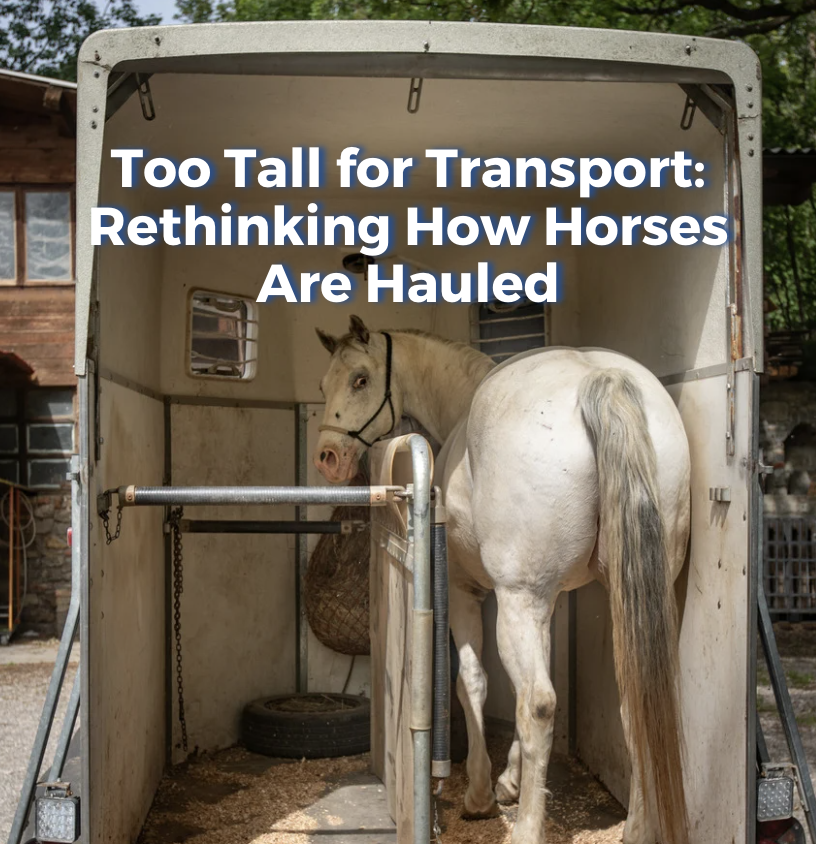
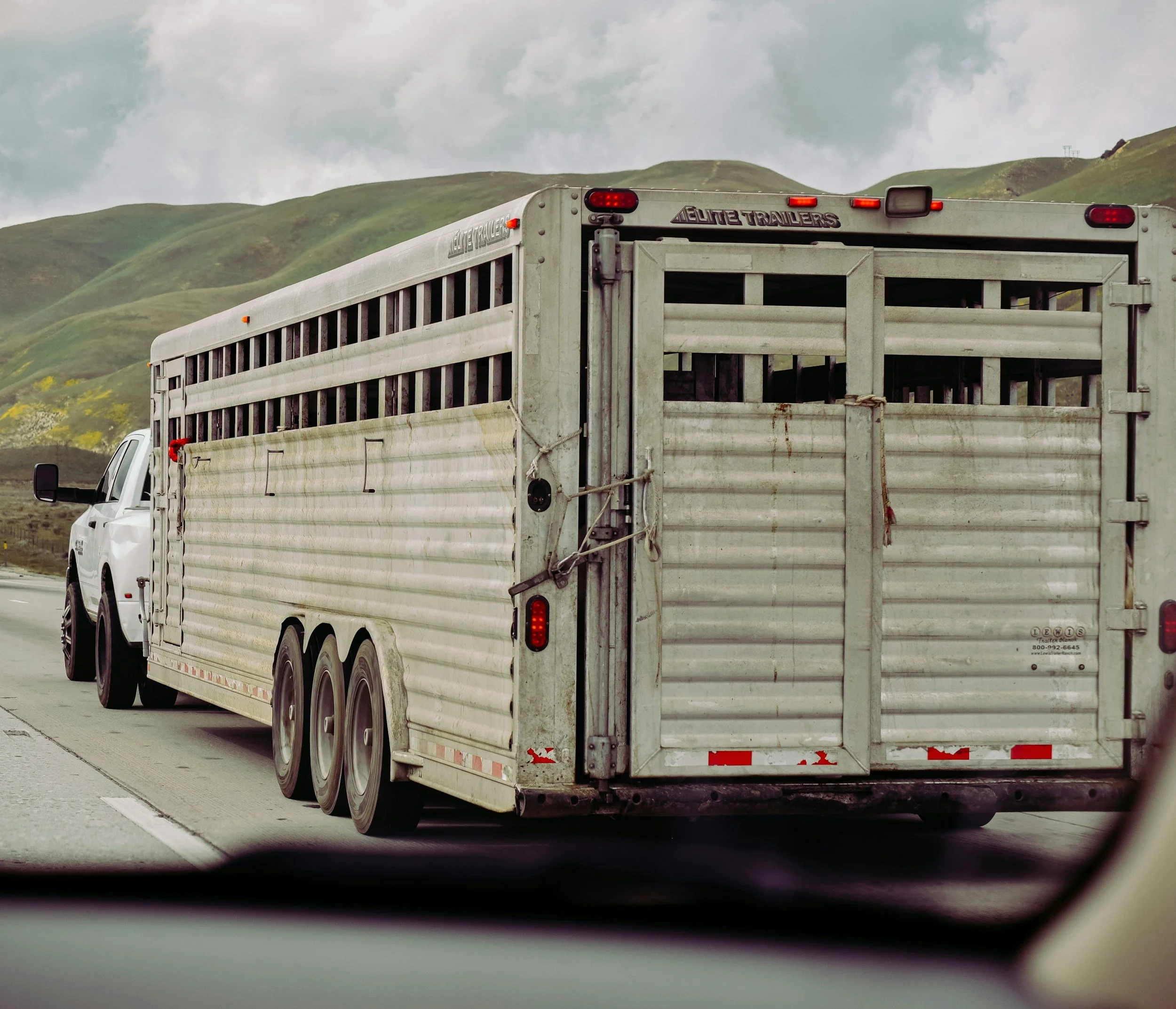
Transportation is one of the most physically demanding and stressful experiences a horse can endure. Yet for decades, horses have been moved long distances in trailers that were never designed with their size, posture, or safety in mind. Among the most concerning of these are double-deck livestock trailers.
Double-deck trailers are built to maximize cargo space for shorter animals like cattle and pigs. When horses are loaded into these trailers, the fit is fundamentally wrong. Adult horses need enough vertical space to stand naturally, adjust their balance, and raise or lower their heads as the vehicle moves. In double-deck trailers, that space simply does not exist.
Why Height Matters
Horses rely on their heads and necks to maintain balance. When a horse cannot stand upright or move freely, every turn, stop, and shift in speed becomes more dangerous. Over long periods, forced crouching can cause muscle strain, fatigue, and heightened stress—conditions that make falls and injuries far more likely.
The design of double-deck trailers compounds the problem. Horses transported on upper levels must navigate steep ramps during loading and unloading, increasing the risk of slips and panic. Inside the trailer, low ceilings and limited room leave little margin for error if a horse stumbles.
Safety Risks Extend Beyond the Trailer
The dangers of double-deck horse transport don’t stop with the animals themselves. Trailers carrying multiple large animals at height are harder to stabilize and control, especially at highway speeds. When accidents occur, they can be catastrophic—not only for the horses inside but for everyone sharing the road.
These risks have been recognized before. More than a decade ago, federal regulators acknowledged that horses require special consideration during transport, leading to restrictions on certain high-risk practices. However, those protections remain incomplete, leaving many horses vulnerable depending on the purpose of their transport.
A Patchwork of State Protections
In the absence of comprehensive federal standards, several states have taken action on their own. Across the country, lawmakers have increasingly recognized that transporting horses in multi-level trailers poses unacceptable welfare risks. Some states have banned the practice outright, while others have imposed limits to reduce the most dangerous conditions.
These state-level efforts signal a broader shift: growing recognition that horses are not interchangeable with other livestock and should not be transported using equipment designed for entirely different species.
Toward a National Standard
The Horse Transportation Safety Act seeks to bring consistency and clarity to this issue by prohibiting the interstate transport of horses in double-deck trailers altogether. The goal is simple: ensure that horses are transported in a way that reflects their physical needs and minimizes preventable harm.
Supporters of the legislation argue that this is not a radical change—it is a practical, science-informed correction to an outdated practice. By setting a clear national standard, the Act would protect horses while also improving roadway safety for drivers.
Moving Forward Humanely
Horses are powerful, sensitive animals who depend on humans to make decisions in their best interest. How we transport them matters. Ending the use of double-deck trailers for horses is a commonsense step toward safer, more humane handling—one that aligns modern transport practices with basic principles of animal welfare.
As public awareness grows and more states take action, the question is no longer whether this change is necessary, but how quickly we are willing to make it.
Take Action for Horses in Transport
Horses deserve to be transported safely, humanely, and with their physical needs fully considered. Outdated practices like double-deck trailers put horses—and the public—at unnecessary risk.
Visit our Equine Advocacy page to learn more about current policy efforts to protect horses in transport.
Take action now by signing the Ban Dangerous Double-Deck Trailers for Horse Transportation action alert and urging lawmakers to support safer, humane transport standards nationwide.
Source: Animal Welfare Institute