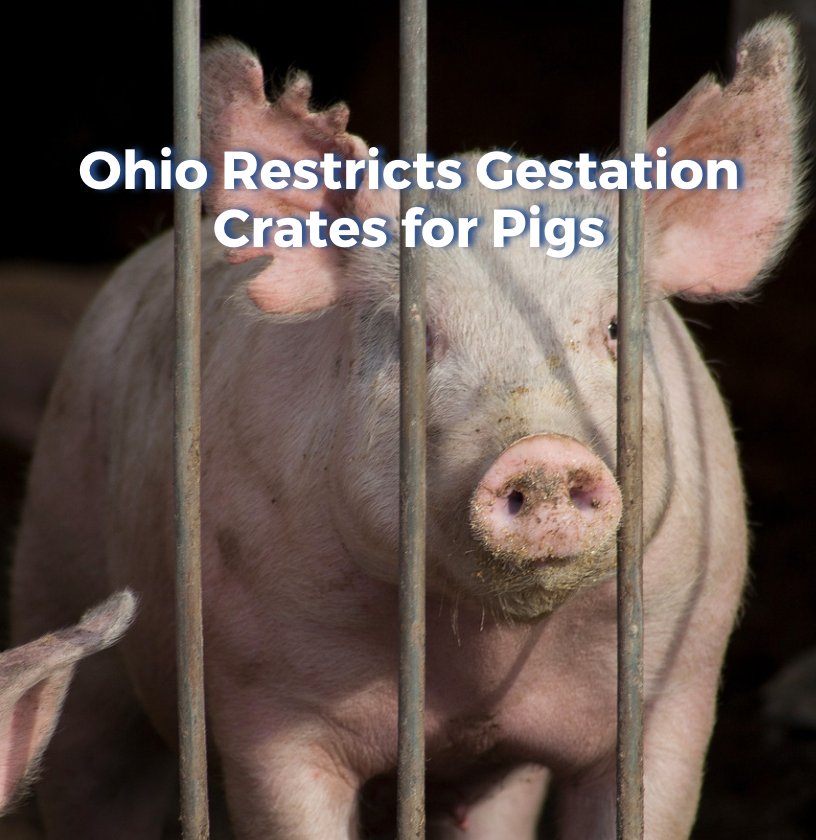
As of December 31, 2025, Ohio officially became the 11th state to restrict the use of gestational crates for pigs—marking the end of a 15-year effort to improve animal welfare standards in one of the nation’s leading pork-producing states pasted.
Gestation crates are narrow metal enclosures used in hog breeding operations. Historically, some sows were confined in these stalls for nearly their entire four-month pregnancy—unable to turn around, stretch, or move freely—often for multiple successive pregnancies.
Under Ohio’s new standards, gestation crates may only be used briefly during the initial stage of pregnancy. After that point, sows must be moved into group housing systems, where they can walk, socialize, and engage in more natural behaviors.
Why This Change Matters
Animal welfare advocates have long raised concerns about the physical and psychological toll of long-term confinement. According to Wayne Pacelle, former president of Animal Wellness Action and a key organizer of Ohioans for Humane Farms, some breeding sows were confined for years at a time—cycling through pregnancy after pregnancy with little relief.
This policy shift directly addresses those concerns by limiting prolonged confinement and aligning Ohio with evolving welfare standards already adopted in other states.
A Decade-Long, Collaborative Effort
Unlike many animal welfare reforms that come through ballot initiatives or court challenges, Ohio’s approach was the result of a negotiated compromise.
In 2010, animal protection groups had gathered enough signatures to place a sweeping livestock confinement ban on the ballot. Instead of pursuing a costly and divisive campaign, stakeholders—including farm groups and animal advocates—worked together to establish a phased, science-based reform process overseen by the state.
That process led to the creation of the Ohio Livestock Care Standards Board, a first-of-its-kind system designed to set livestock care standards using veterinary science, research data, and on-farm expertise.
According to the Ohio Pork Council, farmers have spent more than a decade preparing for the transition—investing in new facilities, infrastructure, and housing systems suited for group living.
What This Means for Farmers and Consumers
Ohio is one of the top 10 pork-producing states in the country, and more than 98% of its pork farms are family-owned. The shift to group housing represents a significant financial investment for these operations, particularly multigenerational farms.
Despite those costs, industry leaders say the changes are not expected to increase pork prices, which are driven more by supply, demand, and global markets than housing systems.
Part of a Bigger Picture
The gestation crate restrictions are the final piece of an eight-part animal welfare reform package negotiated in 2010. That agreement also included:
Accelerated phase-outs of veal crates
Limits on battery cages for laying hens
A ban on dragging “downer” cows for slaughter
Stronger penalties for cockfighting
Crackdowns on puppy mills
Prohibitions on private ownership of dangerous exotic animals
Together, these reforms represent one of the most comprehensive state-level advances for animal welfare in U.S. history.
A Model for the Future
Ohio’s experience shows that meaningful animal welfare reform doesn’t have to be adversarial. Through collaboration, phased implementation, and science-based standards, states can improve conditions for animals while giving farmers time and support to adapt.
As more states grapple with how to modernize agricultural practices, Ohio’s gestation crate reforms may serve as a roadmap for balancing animal welfare, agricultural viability, and public values.
Source: Dayton Daily News