
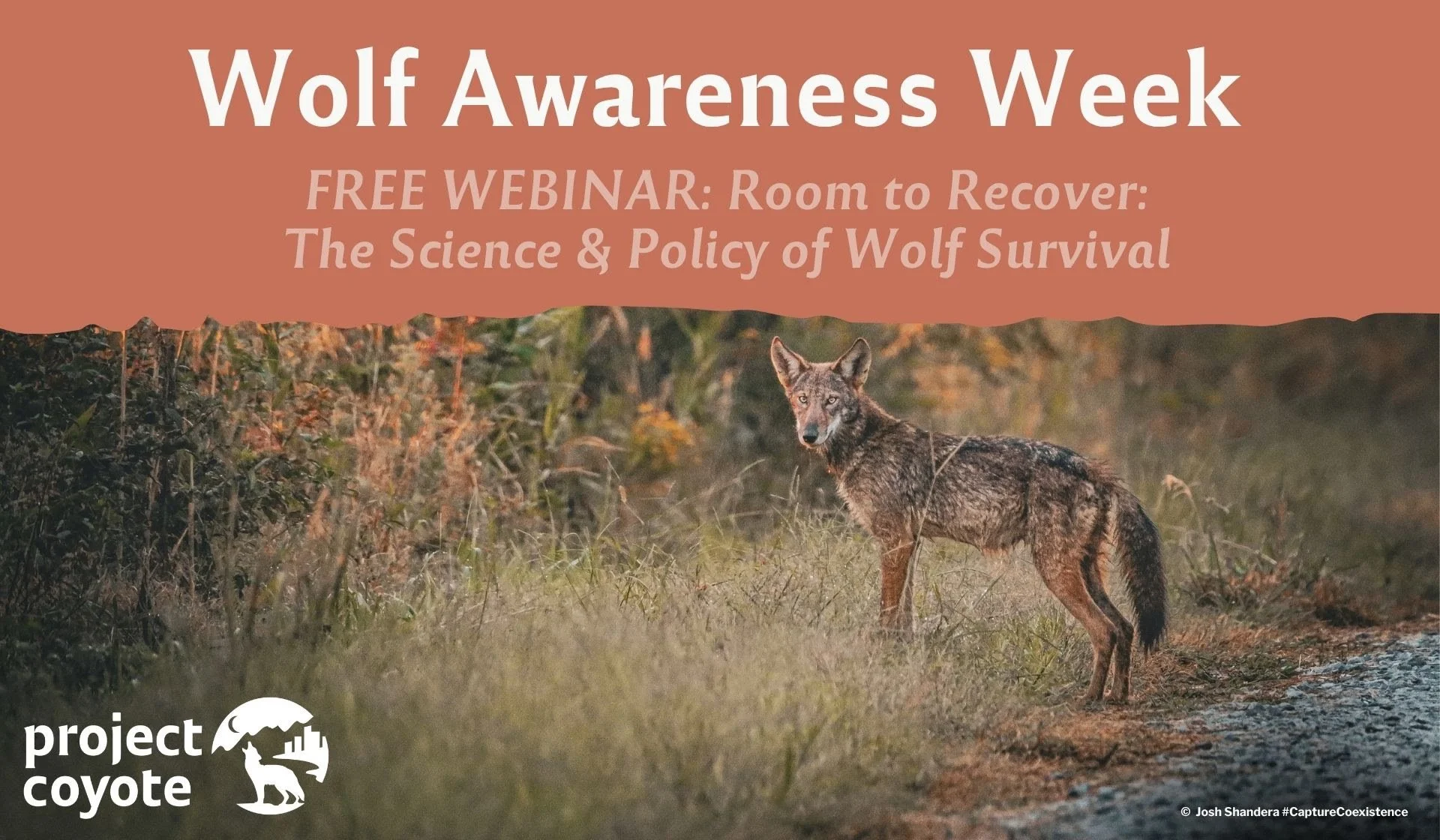
Wildlife agencies too often reduce recovery to a numbers game. They set a target population size, declare victory once it's hit, and then open the door to hunting and trapping the very species they just deemed "recovered." This has been the story for wolves across the United States, who were driven to the brink of extinction and are only now regaining a foothold in parts of their historic range.
But the science clearly shows that a number on paper isn't enough. Wolves need large, connected habitats, strong legal protections, and the freedom to form new packs, find sufficient food, and maintain genetic diversity. Our webinar "Room to Recover” examines the policy and science of wolf recovery beyond the numbers, delving into what wolves need to survive and thrive now and into the future.
Presenters: Dr. Ron Sutherland, Chief Scientist, Wildlands Network Ron leads Wildlands Network's science programs on habitat connectivity, road ecology, and species conservation. He holds a Ph.D. in Environmental Science and Policy from Duke University and an M.S. in Conservation Biology and Sustainable Development from the University of Wisconsin. He'll discuss why wildlands protection and habitat connectivity are essential to wolf recovery, drawing on his research on red wolves in North Carolina. Chris Smith, Wildlife and Wild Places Program Director, WildEarth Guardians With more than 15 years advocating for policy change across the Western U.S., Chris leads WildEarth Guardians' work to protect forests, deserts, and the wild and human communities that depend on them. He'll share effective policy strategies for defending wolves in the Rockies and beyond.