By Erin Lawson, Operations Director
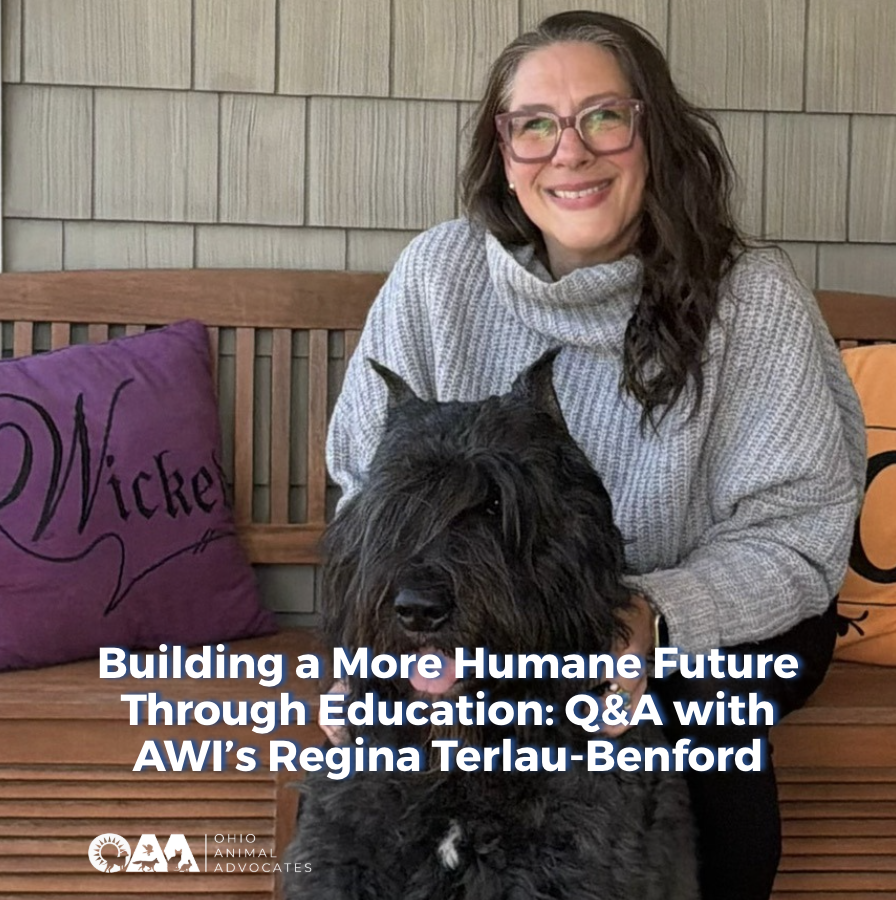
The Animal Welfare Institute (AWI), a long-time partner of Ohio Animal Advocates, is a leader in creating and providing humane education resources to everyone and developing a more humane future for all. Since OAA focuses on the importance of humane education, we wanted to sit down with their Director of Humane Education, Regina Terlau-Benford, to get a better idea of their history, what they’re excited about, and highlight some of their recent accomplishments. Regina has over 15 years experience with AWI, so we were thrilled to have the opportunity to talk with her.
Question: What is your title and can you tell us a bit about your role at AWI?
Terlau-Benford: I am the Director of AWI’s Humane Education Program; I’ve worked for AWI for 15 years but have been really focusing on Humane Education for the last 5 years. I focus on building up the program, connecting with educators of all types, whether they are public school teachers, humane educators at shelters, and more, to let them know about all the free resources AWI has to offer. I also take our other program areas, such as our marine animal and terrestrial wildlife programs, to help develop lesson plans for educators that align with their curriculum standards while also spreading the AWI message. We also have a scholarship and essay program that awards school-aged children who have made an impact.
Question: Do you have any furry friends at home?
Terlau-Benford: Yes! I have a 6-year-old Bouvier des Flandres named Marcel. He is the smartest, silliest dog I have ever met, and I swear he knows when he’s being silly. He was likely originally bred to be a protection dog, but we think he was a little too goofy for that job which is how he ended up with us!
Question: Talking about AWI’s history with humane education, what does humane education mean to AWI, and how did the program begin?
Terlau-Benford: AWI’s humane education work began decades ago when science fairs were unregulated and horrible things were happening to animals in the name of “this is my science fair project.” One of our staffers at the time worked to address that, along with dissection alternatives, and the program grew from there. More recently, AWI branched out to help teach anyone really, but with a focus on elementary and high school students to teach respect for animals, how to care for them, and how that in turn improves the students’ welfare and health. When we look at animal welfare issues, there is a clear link on how it impacts humans. Like when you destroy an animal’s habitat, is it also polluting the water? We want to show that the effects impact not only animals, but people, too. We really want to teach about the link between how we treat animals and their habitats and how it impacts humans since it is all connected.
Question: What part of AWI’s work are you most proud of?
Terlau-Benford: We recently changed the platform for our essay contest and have seen submissions increase, meaning there are more efforts being made by students to create a more humane world. We also track how many books we send and how many lesson plans are downloaded, and those numbers have been increasing each year. We are proud that we are reaching more teachers and shelters, and generally that we are getting more visibility each year. I am proud of the growth that we have seen.
Question: How does teaching kids about animal welfare help shape the way they treat people and animals as adults?
Terlau-Benford: We have learned that there is a link between human and animal violence. Having the emphasis on respect towards animals translates to respecting humans as well, which is where a lot of our programs have a focus. By teaching kids early about respecting animals and the environment, we build foundations for respect for all in their adult lives.
Question: Can you share a success story about a student or educator who was changed by your materials?
Terlau-Benford: Yes! Back in 2009 or 2010, I was attending conferences for science teachers to educate about dissection and alternatives, where those animals are sourced from, things like that. I remember a teacher coming to our table and taking a lot of resources and talking with us for a while. The next day, she came back and let us know that she wasn’t aware of any of this and was grateful for the education. Back then, AWI had a program where we would provide dissection alternative software if schools agreed to not use traditional dissection for a period of six years, and this teacher was successful in convincing her leadership to take part. She even went on to write an article in partnership with AWI and helped with some lesson plans. This is the goal of our work and considered a huge success.
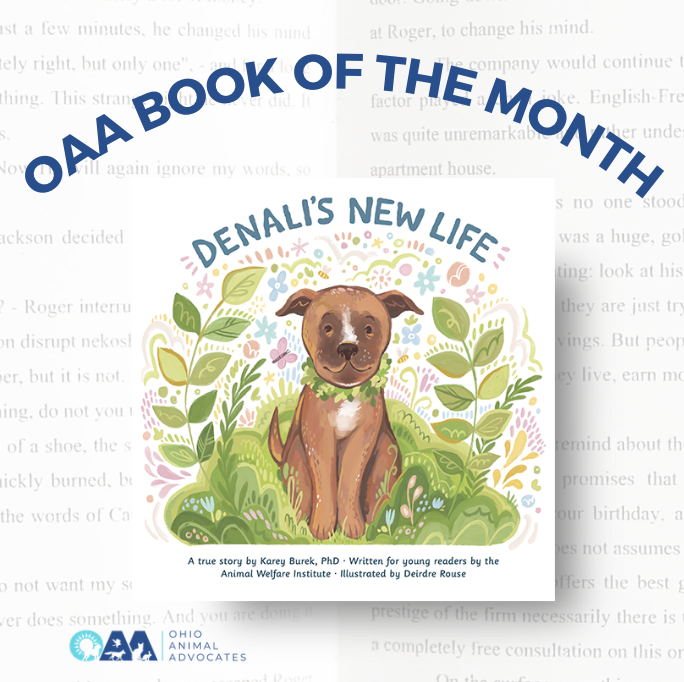
Question: Ohio Animal Advocates recently highlighted AWI’s newest book Denali’s New Life as our Humane Education Book of the Month. How can educators use this, and what other projects are you looking forward to?
Terlau-Benford: Since we don’t want to assume what educators need from our books, we trust that they will use Denali’s New Life as they see fit. We have already received feedback about the desire for a lesson plan which is something we will develop as we continue to hear from educators. We always want to make sure that the resources we develop will actually be applicable, and that’s something I am excited about. It is exciting to see how our resources are being used and how we can create additional resources to continue helping educators.
Question: Similar to Denali’s New Life discussing domestic violence, we know that some animal welfare topics can be difficult for younger kids to understand. How does AWI approach these topics?
Terlau-Benford: While AWI doesn’t do many local visits, when we do we are careful to be mindful of our story-telling to ensure it is age appropriate. Also, we make sure that the resources we create are based in science. Since those resources are scientific and fact-based, it makes the topics a bit easier to understand and digest. We have our resources reviewed by multiple parties to make sure we are taking an effective, age-appropriate approach.
Question: What resources does AWI offer beyond humane education books and lesson plans?
Terlau-Benford: We have tons of free resources that are available to all! We have humane education books that we mail out at no cost, and many of those books have lesson plans available on our website for free download.
In addition to our humane education books and lesson plans, we also have teams that research and develop resources. Such teams and resources include our Farmed Animal Team that offers resources on keeping farmed animals safe in inclement weather and how to prevent barn fires; our Lab Animal Team has created resources on how to improve the welfare of animals used for research; our Companion Animal Team educates veterinarians on signs of abuse; and all of our teams educate on how to advocate for animals and ways to contact your legislators to improve protections for all animals.
All of our resources are free and available on our website!
Question: How would you recommend an advocate, local rescue, or educator bring humane education into their community?
Terlau-Benford: A good way to start is to look into literacy programs in your area, especially if you are starting from scratch. You can find out what kind of library programs exist and share books with them. Also, finding a place to volunteer so you can learn more and figure out the best approach for your community is important. Finding a reliable source to keep updated on issues in your area and simply getting involved is a good place to start.
And, staying informed is critical - even when the subject matter is difficult.
Question: What changes in humane education are you most hopeful about?
Terlau-Benford: I think I’m most hopeful about what we’ve been seeing within our student contest program. As part of this program, students can submit videos and other information about projects they’ve been working on. It shows that these students are seeing a problem and are taking initiative to address it. Seeing what our youth have been doing to tackle humane issues has been really cool, and I am hopeful to see the continued impact of this program.
And our scholarship program shows what students have been doing and acknowledging those wins. We have seen clubs formed, fundraising efforts, and even bird and bat boxes being made by students across the country.
Question: If people take one thing away from reading this, what should it be?
Terlau-Benford: While our programs may focus on elementary and high school students, we want people to know that any age is a good age to start humane education. While it is best to reach kids at a younger age, all can benefit from learning more about respecting animals and the environment.
We want people to know that resources are out there, free of charge, for classrooms, animal shelters with humane education/reading programs, libraries, and more - there’s something out there for everyone!
We want to thank Regina for taking the time to chat with us, along with the entire AWI team for all they do! AWI has worked with us on legislative issues for the past 8 years, and we are thrilled they have offered to partner with us on our humane education efforts by providing humane educators in Ohio books and lesson plans - whether the environment is in the classroom, library or out in the field. You can see all that AWI has to offer on their website, and they will send books and resources to you for free! We are appreciative of all the work that AWI has done to create a better future for all animals, and are excited to highlight their work and act as connectors for Ohio educators to get more involved with humane education. We encourage humane educators to reach out to OAA if you would like these free resources. In fact - AWI would be happy to share copies of Denali's New Life this fall to all who would like copies!
Follow in Regina’s Footsteps
1. Check out OAA’s Humane Education resources and AWI’s Humane Education resources. Both organizations have has a put together a collection of books, videos, lesson plans and more, to help expand humane education.
2. Make a difference today by completing our action alert for H.R. 712 to increase child and animal abuse detection. With your support, we can expand data collection and create a better foundation for child and animal abuse screening, prevention, and treatment programs.
3. Share this update and action alerts with friends and family!
4. Subscribe to our e-newsletter to receive animal welfare related news and resources in Ohio straight to your inbox.