For survivors of domestic violence, leaving an unsafe situation is never simple. It’s not just about packing a bag and finding shelter. It’s about making impossible decisions. For some, that decision includes leaving behind a beloved animal.
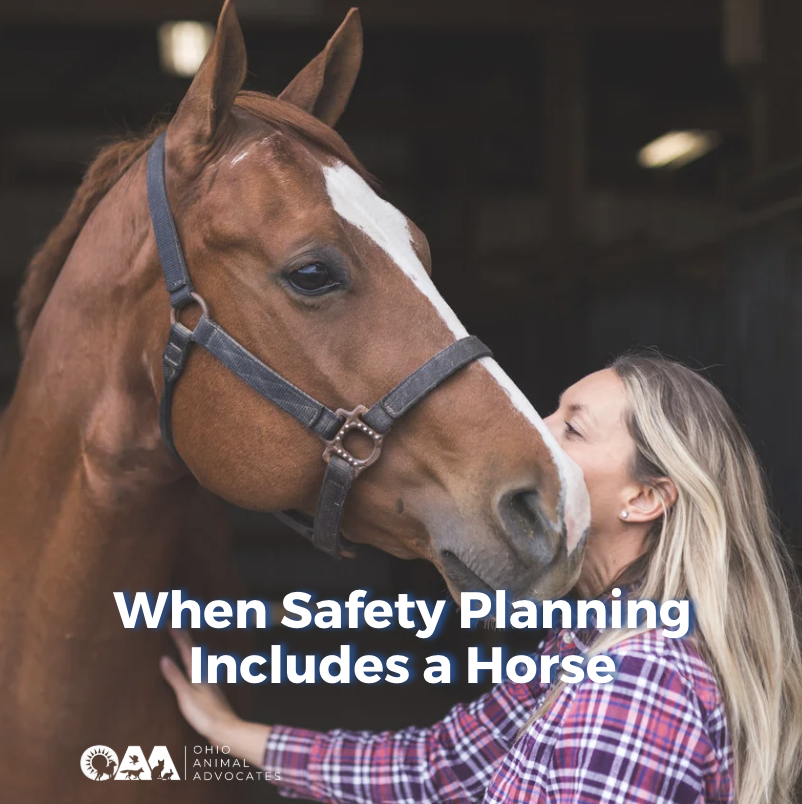
We often talk about the bond between people and their pets—dogs, cats, and small companions—but what about those whose companions weigh over 1,000 pounds?
What happens when safety means figuring out how to protect a horse?
A Gap in Services We Can’t Ignore
A recent story from the Maine State Society for the Protection of Animals (MSSPA) highlights a critical and often overlooked gap in domestic violence services: support for survivors with large animals.
Through their newly developed Safe Shelter program, MSSPA is providing temporary, no-cost care for horses belonging to survivors fleeing abuse. The program was inspired by a simple but powerful truth:
Keeping people with their animals helps them leave and helps them heal.
This isn’t just a compassionate idea. It’s backed by data. Studies show:
97% of survivors say their pet is important in their decision to seek safety
50% of survivors would not consider shelter at all if they cannot bring their pet
Now imagine those barriers multiplied by land needs, transportation challenges, and specialized care. That’s the reality for horse owners.
Why This Matters for Ohio
Programs like MSSPA’s Safe Shelter are rare, but they shouldn’t be. In Ohio, we know:
Access to pet-inclusive domestic violence services is still limited
Many survivors delay leaving dangerous situations out of fear for their animals
Large animals, like horses, are almost entirely left out of the conversation
At OAA, we’ve seen how policies like pet protective orders, co-sheltering programs, and cross-sector collaboration can change outcomes, not just for animals, but for people.
This story expands that conversation even further.
A Model Worth Replicating
MSSPA didn’t reinvent the wheel, they built on what they already do well.
They:
Created a secure paddock space for temporary housing
Established a care and feed fund to eliminate financial barriers
Partnered with domestic violence services to respond quickly to urgent needs
When a survivor needed help earlier this year, they didn’t wait, they acted. The horse was transported, cared for, and given a safe place to land while the owner worked toward stability.
That’s what real support looks like.
The Bigger Picture: The Link Between Human & Animal Welfare
This story reinforces something we talk about often at OAA: Animal welfare and human welfare are deeply connected.
When we:
Expand access to care
Build pet-inclusive systems
Support survivors holistically
We don’t just save animals, we remove barriers that keep people in harm’s way.
What Can We Do?
We don’t need to start with horses to make an impact. But we do need to start. Here’s how Ohio can move forward:
1. Submit an action alert to Support Unhoused People and Pets. The Providing for Unhoused People and Pets (PUPP) Act would establish a grant program for homeless shelters to access the funds they need to support clients with pets.
2. Review our Pet Protection advocacy page. See how we’re advocating for at-risk family members and safety planning for their pets, because we recognize the link between family violence and animal abuse.
3. Sign up for the Ohio Animal Advocates newsletter to receive updates, resources, and action alerts on issues affecting animals across the state.