
News
Stay informed on all things OAA, right here or in your inbox. Sign up for e-news to receive our resources, action alerts, events, and much more!
For media information regarding OAA or interview opportunities with one of our experts, please view our Media Kit.
Sign up for e-news:
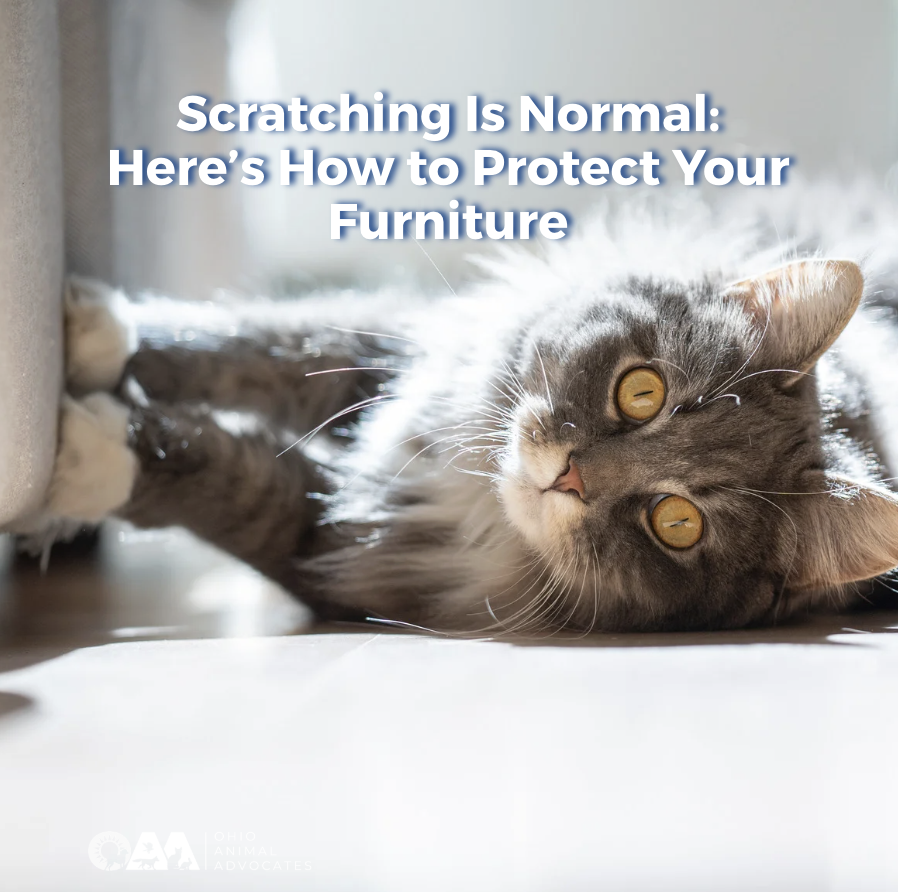
Scratching Is Normal: Here’s How to Protect Your Furniture
Scratching is a normal part of being a cat, even when your furniture would prefer otherwise. Our partners at Give Them Ten and Scooter the Neutered Cat recently shared helpful tips for understanding why cats scratch and how cat owners can redirect the behavior to more appropriate places.
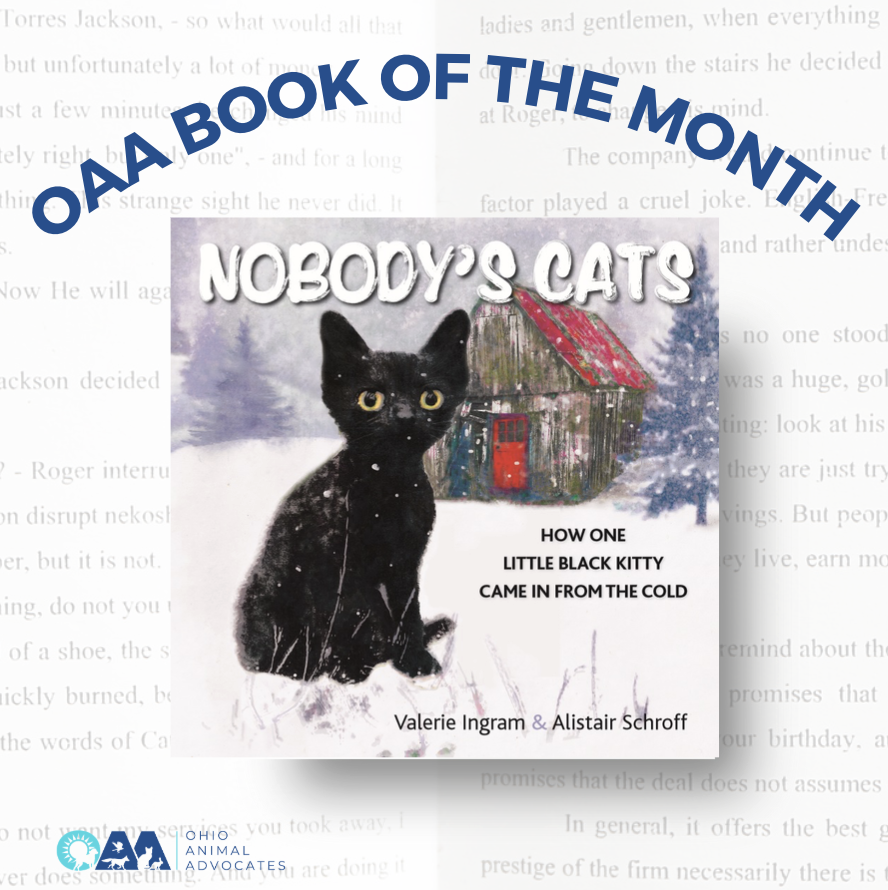
OAA Book of the Month - Nobody’s Cats: How One Little Black Kitty Came in From the Cold
Colder temperatures are around the corner, OAA knows how difficult it can be to see cats outdoors and wonder what you can do to help. That’s why we are highlighting a book that introduces young readers to community cats and how we can best support them through teamwork and education. Read about Nobody’s Cats: How One Little Black Kitty Came in From the Cold by Valerie Ingram and Alistair Schroff.
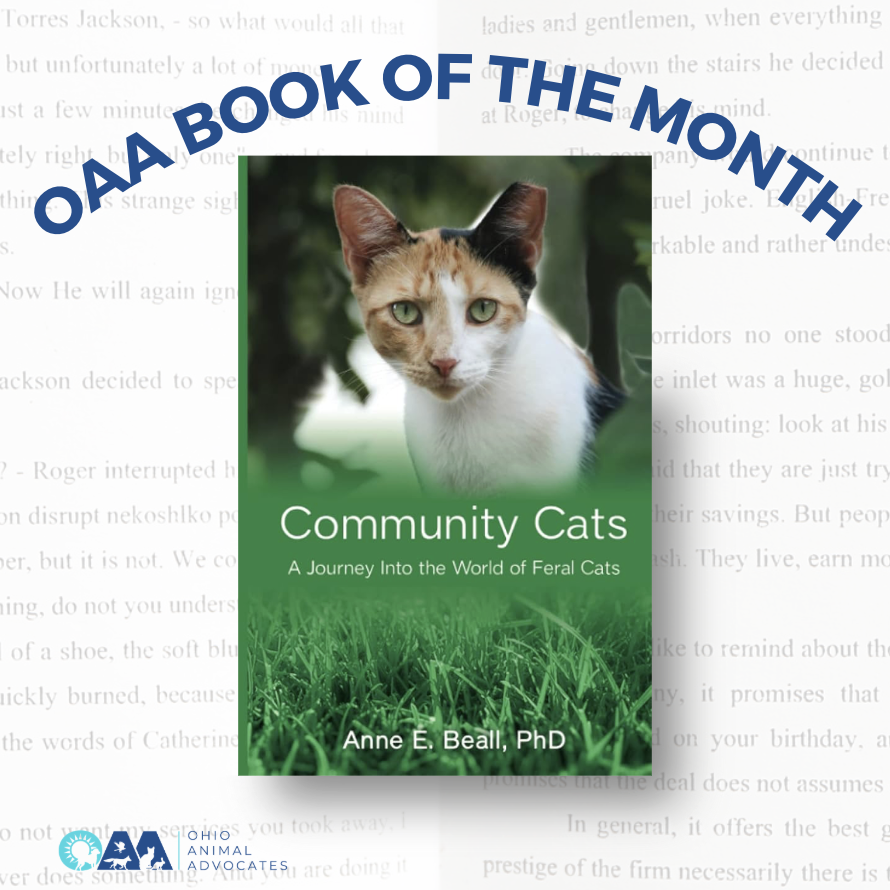
OAA Book of the Month - Community Cats: A Journey Into the World of Feral Cats
Community cats. Some people love them, while others may not understand them or why they’re here. As the seasons change and concerns about outdoor animals grow, OAA wanted to highlight a book for adult readers that takes a closer look at community cats through one person’s journey into TNVR (trap-neuter-vaccinate-return), backed by research and real-world experience.
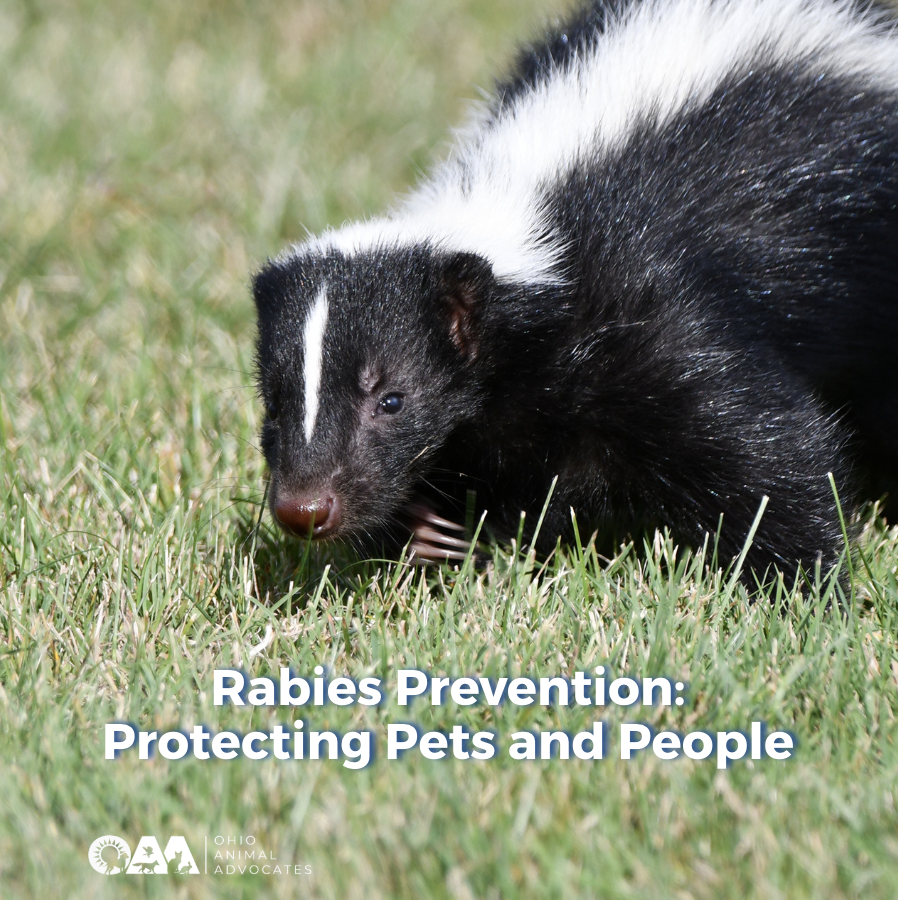
Rabies Prevention: Protecting Pets and People
Recent reports of rabies-positive skunks in Washington County, Maryland offer an important reminder for pet owners everywhere: keeping pets up to date on their rabies vaccinations protects both animals and people. Rabies is a viral disease that attacks the nervous system and is almost always fatal once symptoms develop. It can affect wildlife as well as domestic animals, including cats and dogs.
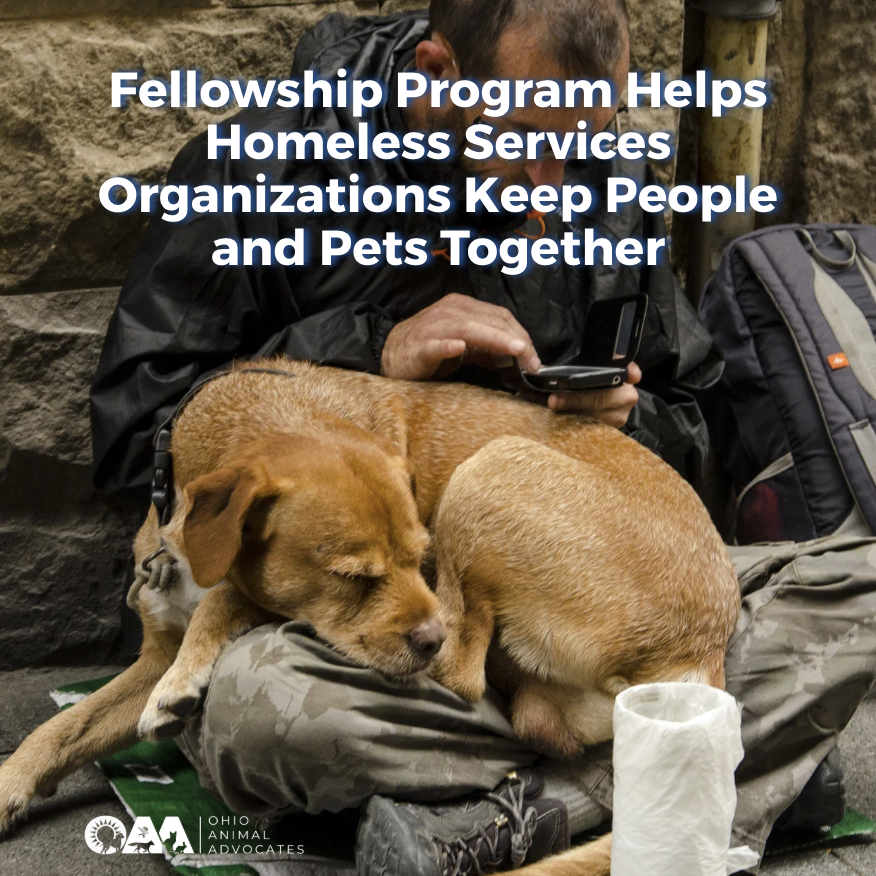
Fellowship Program Helps Homeless Services Organizations Keep People and Pets Together
For people experiencing homelessness, entering a shelter or housing program can sometimes mean facing an impossible decision: accept services or stay with a beloved pet. A fellowship opportunity from My Dog Is My Home is helping organizations build a different model.
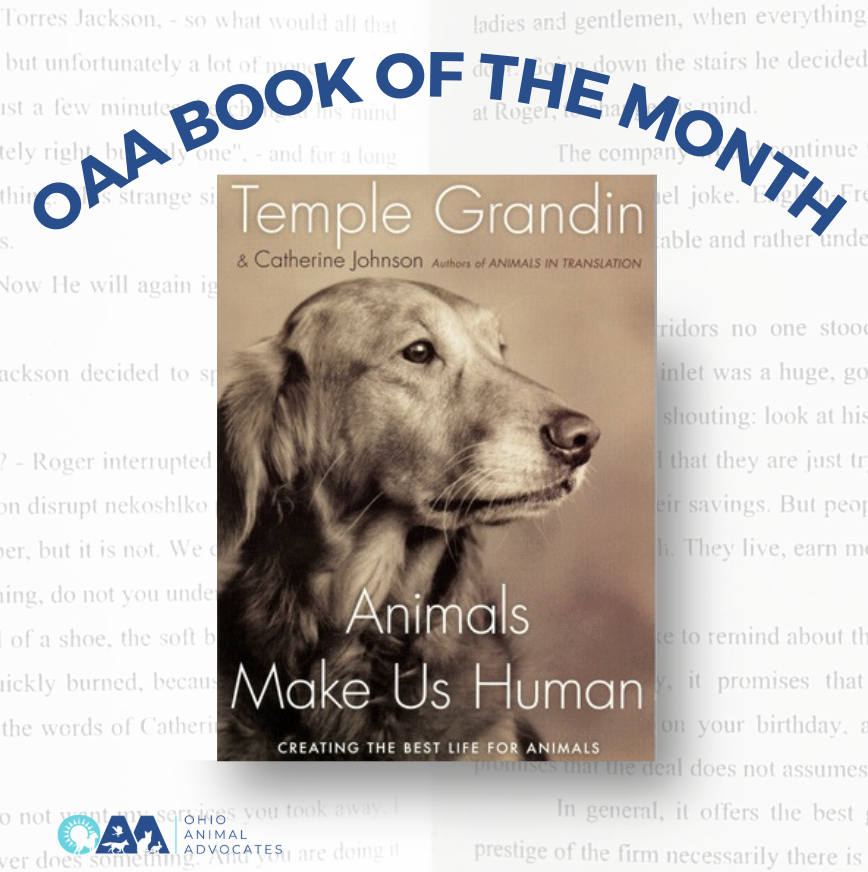
OAA Book of the Month - Animals Make Us Human: Creating the Best Life for Animals
This month, Ohio Animal Advocates is highlighting a book that is perfect to acknowledge Wellness Month which is observed every August. Wellness is important for all creatures, and author Temple Grandin delves into this and more in Animals Make Us Human: Creating the Best Life for Animals. This book is written for high school/college readers and older as it deals with more complex and potentially heavy topics.
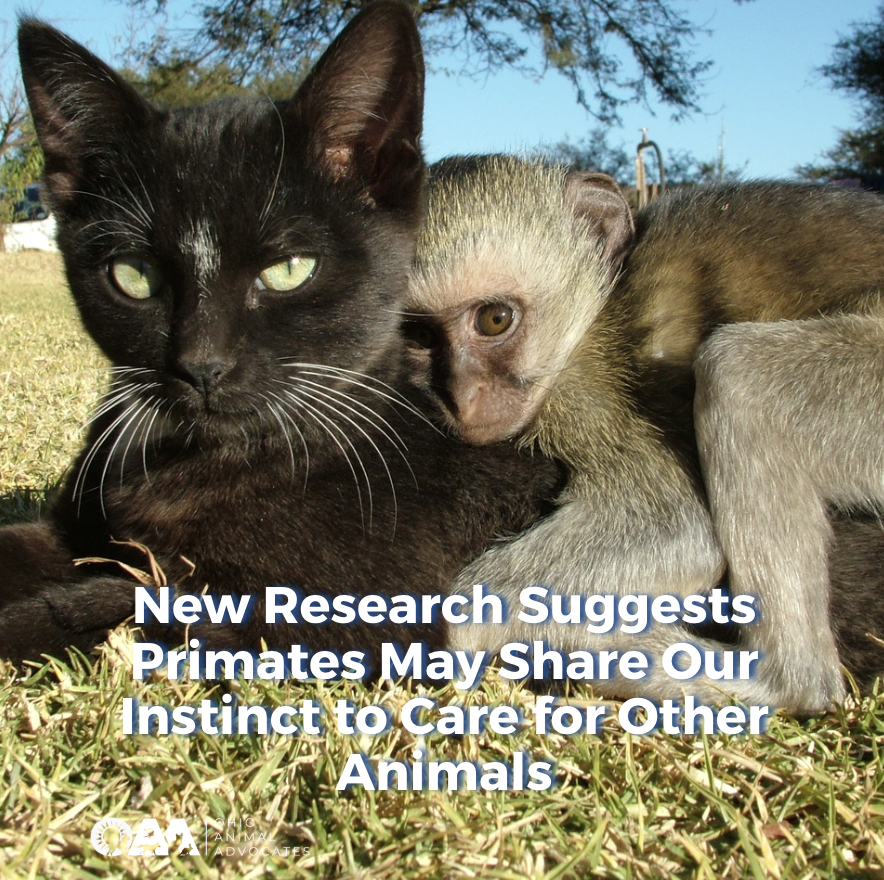
New Research Suggests Primates May Share Our Instinct to Care for Other Animals
Humans may not be the only primates drawn to caring for animals of another species. A new study highlighted by The New York Times examined 427 interactions across 88 primate species, finding behaviors that resemble some of the building blocks of human pet-keeping. Monkeys and apes were observed playing with, grooming, carrying, and even caring for animals of other species.

Three Horse Racing Trainers Receive Lengthy Suspensions
Three Thoroughbred horse trainers have received lengthy suspensions following separate cases involving banned substances, tampering, and prohibited association, according to BloodHorse. The Horseracing Integrity and Welfare Unit (HIWU), which enforces national anti-doping and medication rules in Thoroughbred racing, issued penalties against trainers Luis Diaz, Erin Thompson, and Dominic Duree.
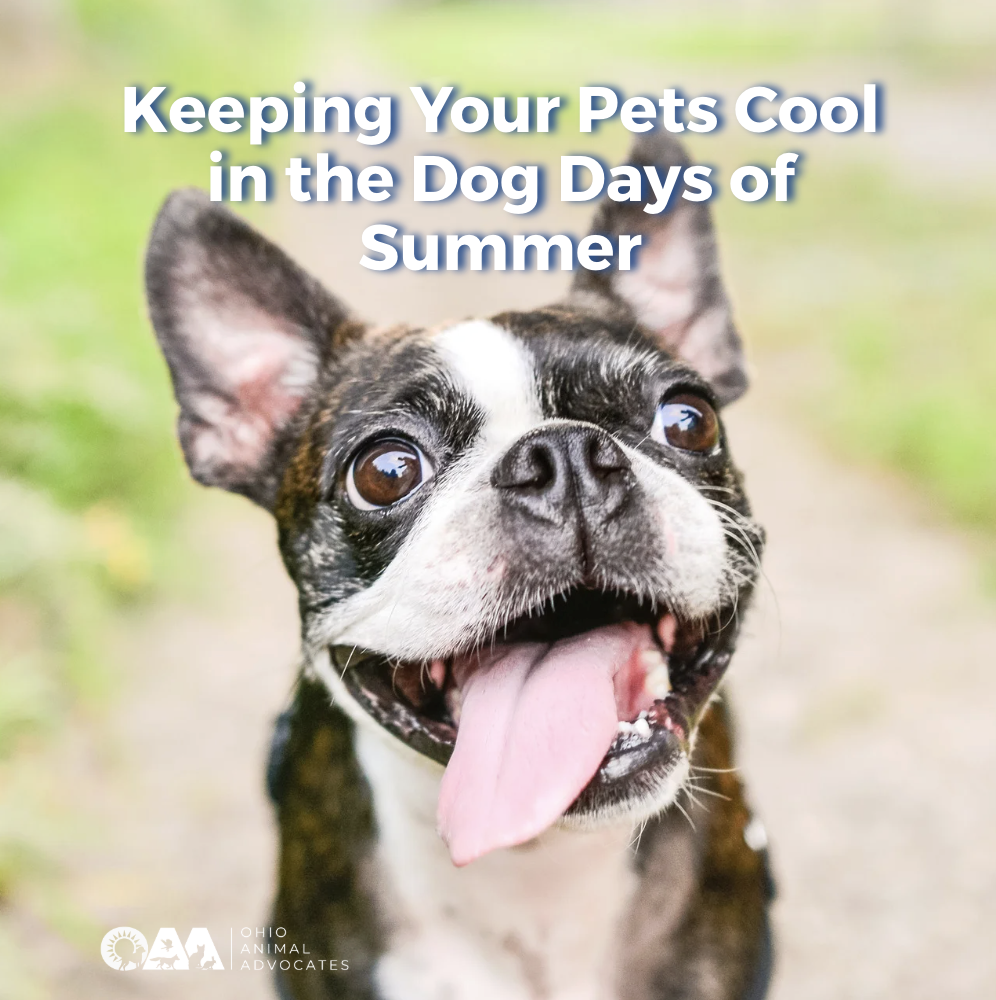
Keeping Your Pets Cool in the Dog Days of Summer
The Dog Days of Summer are the hottest of the year, and a time when it’s especially important to keep your dogs and other animals cool. As Ohio, and the United States, experience all-time high temperatures and extreme heat advisories, pet owners may struggle to ensure that their animals stay healthy and happy amidst the hot weather.
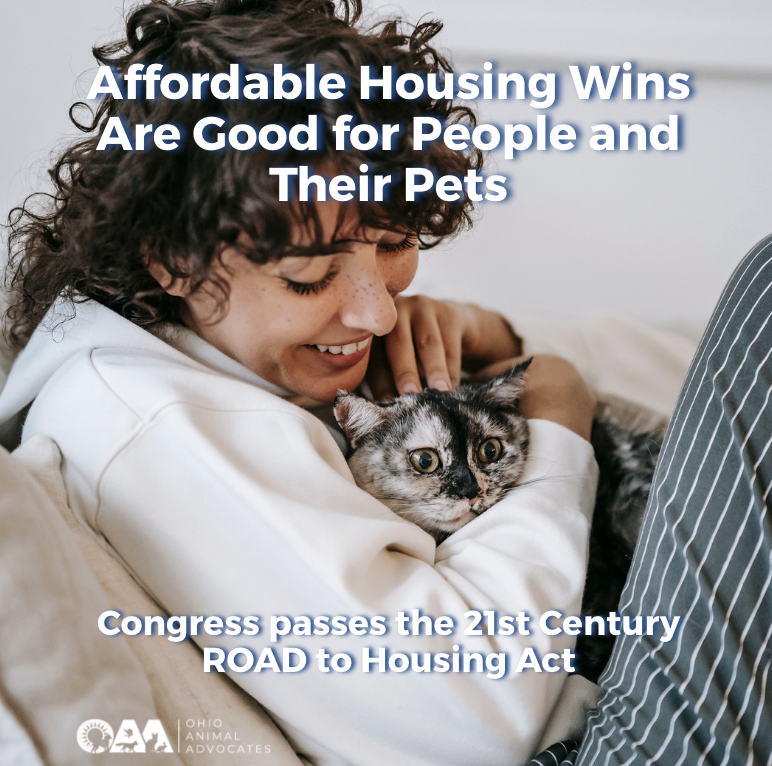
Affordable Housing Wins Are Good for People and Their Pets
Thanks to a recent advocacy update from the Coalition on Homelessness and Housing in Ohio (COHHIO), we are pleased to report that Congress recently passed the 21st Century ROAD to Housing Act. This is the most comprehensive federal housing legislation in more than two decades. The bipartisan law aims to expand affordable housing, improve access to housing assistance, and increase housing supply.

Ohio Rent Continues to Outpace Wages, Increasing Financial Insecurity
A new report from the National Low Income Housing Coalition and the Coalition on Homelessness and Housing in Ohio highlights a growing challenge for Ohio renters: wages are no longer keeping pace with the rising cost of housing. According to the 2026 Ohio Out of Reach report, a full-time worker in Ohio must earn at least $23.82 per hour to afford a modest two-bedroom apartment.
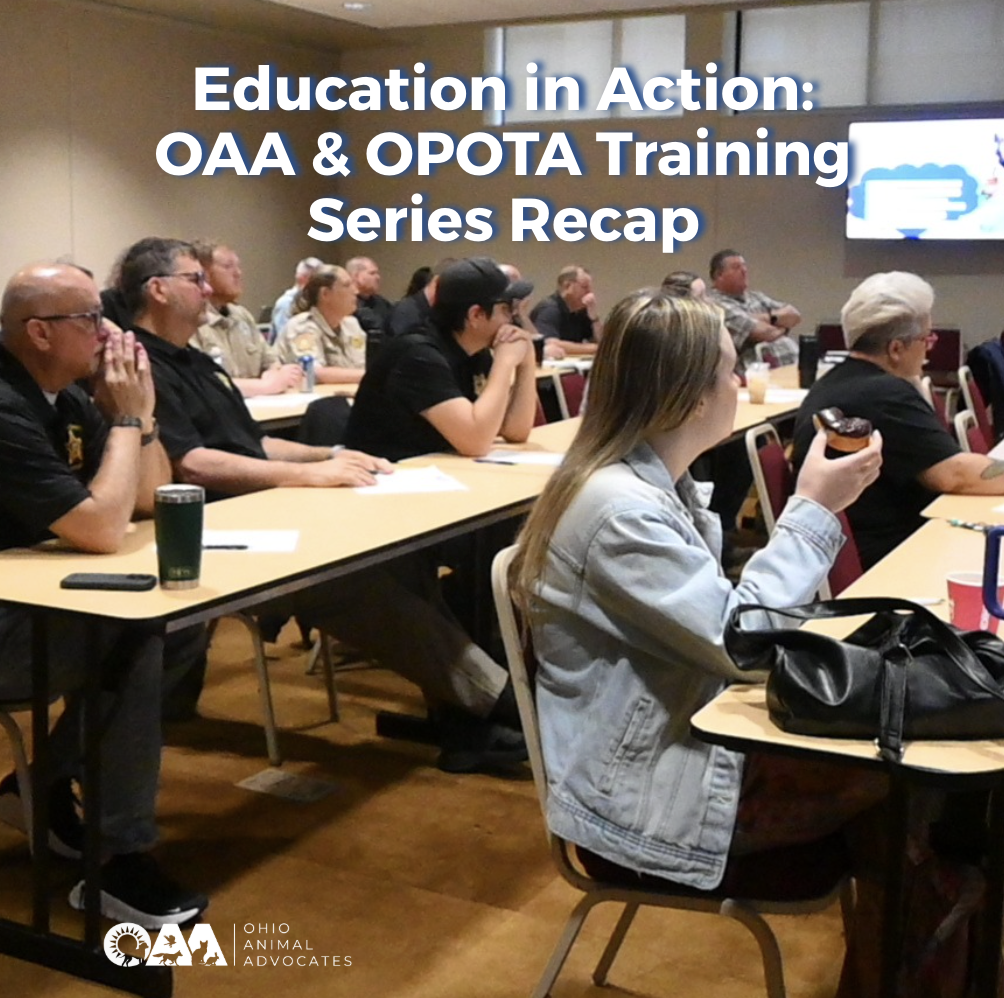
Education in Action: OAA & OPOTA Training Series Recap
Ohio Animal Advocates (OAA) partnered with the Ohio Peace Officer Training Academy (OPOTA) to deliver a statewide training series focused on The Link Between Human and Animal Violence. Thanks to the support of the Animal Welfare Institute and Kenneth Scott Charitable Trust.
“We can change the world and make it a better place. It is in your hands to make a difference.”
— Nelson Mandela
