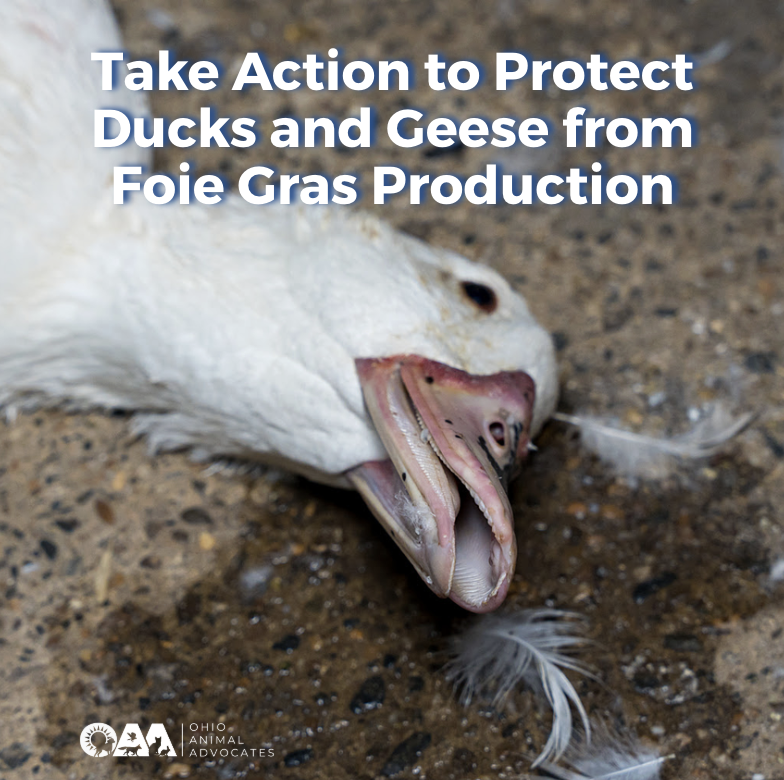
Ohio Animal Advocates is urging supporters to contact their state legislators and support efforts to prohibit the production and sale of foie gras, a product that relies on the force-feeding of ducks and geese.
What Is Foie Gras?
Foie gras, which translates to "fatty liver" in French, is considered a delicacy in some culinary circles. However, its production has long been criticized by veterinarians, animal welfare organizations, and animal advocates due to the extreme methods used to create it.
To produce foie gras, ducks and geese are confined and subjected to a process known as gavage. Beginning at approximately 12 weeks of age, birds are force-fed multiple times per day through a tube inserted down their throats. This feeding regimen causes their livers to enlarge to as much as ten times their normal size, resulting in a diseased condition known as hepatic steatosis.
Animal welfare experts argue that the process causes significant suffering and deprives birds of the ability to engage in many natural behaviors.
Beyond Animal Welfare: Public Health and Environmental Concerns
The concerns surrounding foie gras extend beyond animal cruelty.
Waterfowl are natural reservoirs for highly pathogenic avian influenza (HPAI), commonly known as bird flu. The close and repeated contact between workers and birds during force-feeding may increase opportunities for disease transmission. As avian influenza continues to impact poultry operations across the country, practices that require intensive handling of birds warrant additional scrutiny.
Environmental concerns have also been raised regarding waste generated by foie gras operations. Feathers, feces, wastewater, transportation activities, and slaughter byproducts can contribute to environmental contamination and may create ongoing risks for wildlife and surrounding ecosystems.
Growing Momentum to Ban Foie Gras
Around the world, a growing number of governments have concluded that foie gras production is incompatible with modern animal welfare standards. Several countries have prohibited force-feeding practices or effectively ended foie gras production within their borders.
In the United States, California became the first state to ban foie gras in 2012. More recently, New York City—one of the country's largest foie gras markets—approved a ban that took effect in 2026.
These actions reflect a broader cultural shift as consumers increasingly question agricultural practices that cause unnecessary animal suffering.
Take Action
Ohio has an opportunity to join the growing movement against foie gras production and sales.
1. Ohio Animal Advocates encourages supporters to contact your Ohio legislators and urge them to support legislation that would end the force-feeding of ducks and geese for foie gras production. Sign the action alert to Prohibit the Force-Feeding of Birds.
2. You can also help by sharing this action alert with friends, family members, and colleagues. Public awareness remains one of the most powerful tools for advancing animal protection laws and ensuring that farm animals are treated with greater compassion.
3. Subscribe to our e-newsletter to receive animal welfare related news and resources in Ohio straight to your inbox.