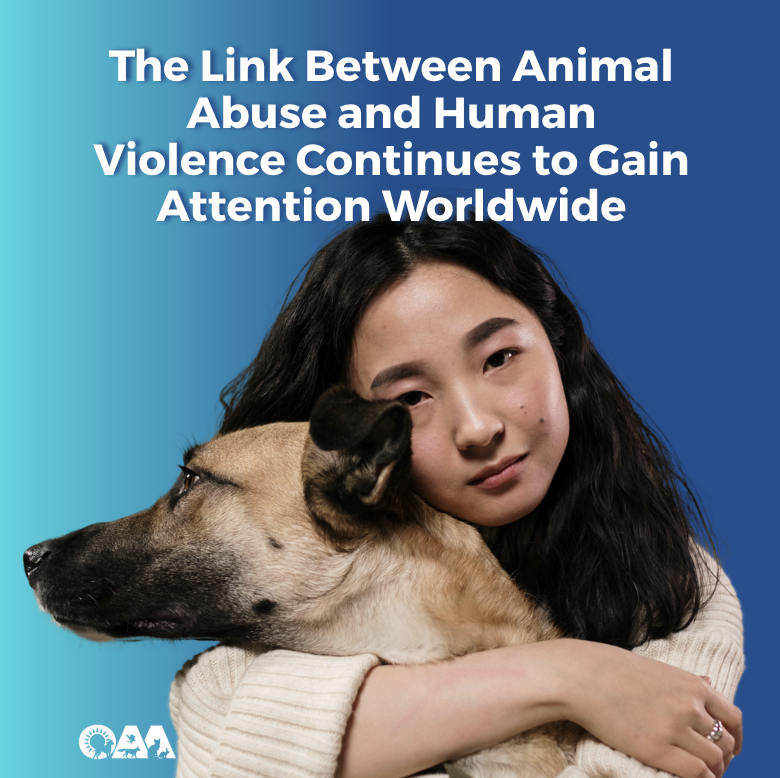

For decades, animal advocates, social workers, law enforcement professionals, veterinarians, and domestic violence experts have recognized an important pattern: violence toward animals often does not occur in isolation.
Research has increasingly demonstrated connections between animal cruelty and other forms of violence, including child abuse, domestic violence, elder abuse, sexual violence, and other criminal behavior. This relationship is commonly known as "The Link."
The National Link Coalition's latest LINK-Letter highlights how awareness of these connections continues to grow around the world, influencing legislation, public policy, education, law enforcement practices, and victim services.
Animal Abuse and Domestic Violence
One of the most well-documented aspects of The Link involves domestic violence.
Abusers may threaten, harm, or kill companion animals to intimidate family members, maintain control, or prevent victims from leaving dangerous situations. For many survivors, concern for a beloved pet can become a significant barrier to seeking safety.
Recent developments highlighted by the National Link Coalition include:
An Indiana law expanding protections related to domestic violence and animal cruelty.
A Connecticut proposal that would create a statewide directory of safe havens for pets belonging to domestic violence survivors.
Recognition from a California shelter of the important emotional support pets provide to survivors rebuilding their lives.
These efforts acknowledge an important reality: protecting animals can also help protect people.
Child Abuse and Animal Cruelty
Research has also found associations between childhood exposure to animal cruelty and other forms of family violence.
The National Link Coalition highlighted a children's book designed to encourage young people to speak up when they witness violence against animals or people. Humane education programs increasingly use these conversations to teach empathy, compassion, and respect for all living beings.
By helping children understand that cruelty is never acceptable, communities can promote healthier relationships and safer environments.
Protecting Older Adults and Their Animals
The Link also extends to elder abuse.
In Atlanta, prosecutors recently organized collaborations between agencies responsible for protecting both animals and vulnerable adults. These partnerships recognize that animal neglect or abuse can sometimes signal broader concerns about the well-being of older individuals living in the same household.
Cross-reporting and collaboration between agencies can help identify situations where intervention may be needed.
The Growing Role of Veterinarians
Veterinarians are often among the first professionals to observe signs of abuse or neglect.
As awareness of The Link grows, veterinary professionals around the world are increasingly receiving training in forensic medicine and abuse recognition. The National Link Coalition reports growing interest in veterinary forensics in countries including Thailand, Ukraine, and the Netherlands.
Veterinarians can play a critical role in identifying suspicious injuries, documenting evidence, and connecting animals and families with appropriate support services.
Humane Education Goes Global
Countries around the world are beginning to incorporate animal welfare and empathy education into schools and public programs.
Recent examples include:
Paraguay's adoption of animal welfare education initiatives.
Humane education resources in France that explicitly discuss The Link between violence toward animals and violence toward people.
These programs help foster empathy and teach future generations about the importance of compassion toward both animals and humans.
Legislative Momentum Continues
One of the most striking updates from the National Link Coalition is the sheer volume of legislation addressing The Link.
According to the coalition, nearly 200 bills have already been introduced this year across 38 states, Congress, and Canada that recognize the connections between animal abuse and interpersonal violence.
These proposals address issues such as:
Including pets in protective orders.
Strengthening animal cruelty penalties.
Expanding reporting requirements.
Supporting safe housing options for survivors and their animals.
Improving collaboration between agencies responding to violence.
The growing legislative interest reflects increasing recognition that animal cruelty is often a warning sign that should not be ignored.
Why The Link Matters
Animal cruelty is often viewed solely as an animal welfare issue. While protecting animals remains critically important, research continues to show that abuse toward animals can also serve as a sentinel indicator of broader violence occurring within homes and communities.
When professionals take reports of animal abuse seriously, they may uncover child abuse, domestic violence, elder abuse, neglect, or other dangerous situations that require intervention.
Likewise, when communities invest in prevention, education, and early intervention, they can improve outcomes for both animals and people.
Looking Ahead
The growing global awareness of The Link represents an important shift in how society understands violence.
Whether through legislation, veterinary medicine, social work, law enforcement, education, or victim advocacy, more organizations are recognizing that protecting animals and protecting people are deeply connected goals.
At Ohio Animal Advocates, we believe that addressing animal cruelty is not only an animal welfare issue. It is also a public safety issue, a family violence issue, and a community well-being issue. OAA continues to train on the Link to first responders to domestic violence such as social and case workers, therapists, counselors, law enforcement, veterinarians, humane agents and dog wardens. OAA worked with partners, such as Animal Welfare Institute, to pass pet protective orders in 2014, felony cruelty and bestiality misdemeanor charges in 2016, and mandated cross-reporting of animal and child abuse in 2021. OAA asks our supporters to take action and ask their State Representative to support Ohio S.B. 393, which passed the senate unanimously, and would make bestiality a felony.
By understanding The Link, we can build safer, more compassionate communities for everyone.
Get Involved
1. Interested in learning more about the link between animal abuse and human violence? Attend our in-person workshop on Avery’s Law and the Link Between Animal and Human Violence: Fundamentals for Law Enforcement. Open to everyone!
2. Need to report suspected animal cruelty? Visit our Statewide Directory to find the appropriate agency for reporting animal cruelty in your county. The directory also includes Safe Haven resources for people experiencing domestic violence who need temporary shelter and protection for their pets.
3. Subscribe to our e-newsletter to stay up-to-date on animal news in Ohio.