Q&A: Exploring Wildlife Fertility Control with Dr. Millie Schafer
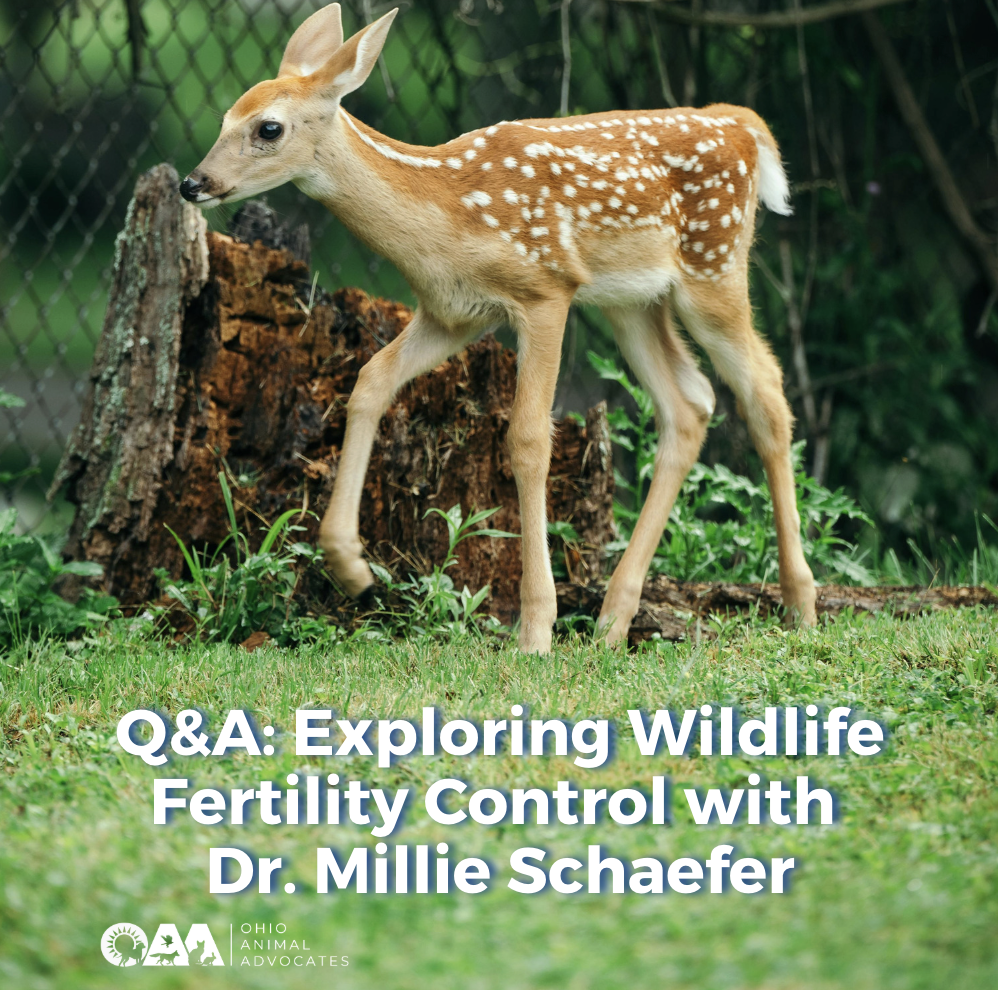
For many people, wildlife population management brings to mind hunting or culling. But around the world, researchers, wildlife managers, and advocates are increasingly exploring another option: fertility control.
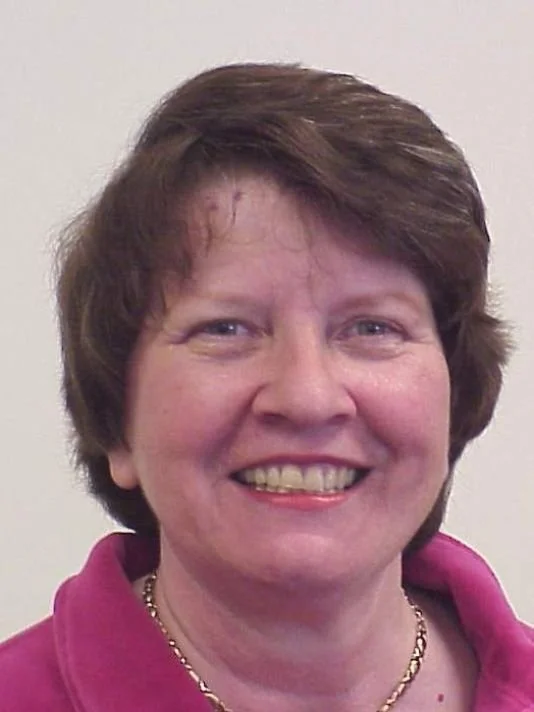
Following Botstiber Institute for Wildlife Fertility Control’s 10th International Conference on Wildlife Fertility Control, held in Barcelona under the theme "Bridging the Gap: From Science to Management," Ohio Animal Advocates spoke with Dr. Millie Schafer, founder and executive director of Cincinnati Urban Deer Advocates, about the growing role of nonlethal wildlife management and what the future may hold.
Question: Tell us about yourself and Cincinnati Urban Deer Advocates.
Dr. Millie Schafer: I'm a retired life science research scientist and the founder and executive director of Cincinnati Urban Deer Advocates. Our organization has two primary goals: supporting nonlethal management of urban deer and advocating for maintaining Cincinnati's longstanding prohibition on the discharge of deadly weapons within the city. We formally became a nonprofit around 2017 after recognizing the need for an organization dedicated to these issues.
Question: Many people are familiar with hunting as a form of wildlife management but may not know about fertility control. What is wildlife fertility control?
Dr. Schafer: Wildlife fertility control simply means using methods to prevent reproduction rather than killing animals to reduce populations. Traditional wildlife management has often relied on lethal methods, but attitudes are changing. More people are interested in approaches that allow humans and wildlife to coexist while still addressing population concerns.
Question: Why are communities looking for alternatives to lethal wildlife management?
Dr. Schafer: There are several reasons. Surveys consistently show that many people enjoy seeing wildlife, especially deer, in their neighborhoods. Others believe it is unethical to kill animals that have become accustomed to living near people.
Another concern is that lethal management often becomes an ongoing cycle. As surviving animals reproduce, the population rebounds. Research has also shown that killing is not always the most effective long-term solution. That's one reason fertility control products are now being developed for species including deer, rats, mice, and wild horses.
Many communities are also looking for ways to coexist with wildlife while reducing conflicts.
Question: What concerns do residents commonly raise about deer in urban and suburban areas?
Dr. Schafer: One of the most common complaints involves damage to landscaping and gardens. Deer-vehicle collisions are another legitimate concern because they affect both public safety and property.
Some people are also concerned about diseases carried by wildlife. Those concerns deserve attention, but they can be addressed through thoughtful management without necessarily relying on lethal control.
Question: What led you to become involved in nonlethal deer management?
Dr. Schafer: My background was actually in community cat management through a trap-neuter-return (TNR) program. Over time, residents began raising concerns about urban deer and illegal hunting within Cincinnati.
As bow hunting expanded in city parks, more residents spoke out after witnessing wounded deer and feeling unsafe using public parks during hunting season. Those experiences motivated me to research deer management more deeply.
The more I learned, the more I became convinced that communities needed to consider humane, science-based alternatives to lethal management.
Question: Is deer sterilization the same thing as wildlife fertility control?
Dr. Schafer: Not necessarily. Surgical sterilization is one option, but it isn't the only one—and it isn't my preferred approach.
I support non-invasive immunocontraceptive vaccines that prevent pregnancy without surgery. Several products have already received approval for use, and additional options are being developed. Some vaccines can prevent pregnancy for several years after a single treatment.
Question: What are some misconceptions about fertility control programs?
Dr. Schafer: One of the biggest misconceptions is that fertility control doesn't work. There is now a growing body of published research showing that long-lasting fertility control methods can effectively reduce and stabilize deer populations.
Communities are increasingly recognizing that nonlethal management can be a practical option, particularly in urban areas where hunting may be controversial or unsafe.
Question: Where is fertility control most effective?
Dr. Schafer: Fertility control has shown promise in many urban and suburban settings, especially where the discharge of firearms or other deadly weapons is prohibited.
Research from communities in places like New York and Canada has demonstrated that these programs can work even when deer are not confined to a completely closed area because deer generally remain within familiar home ranges.
Question: Although you didn't attend the international conference in person, you've been following the presentations. What trends do you see emerging?
Dr. Schafer: The field is growing rapidly. More fertility control products are moving through the approval process, and additional species are being studied.
We're also seeing more states approve fertility control as a wildlife management option. As the science continues to advance, I expect more communities will adopt nonlethal approaches alongside traditional management methods.
Question: Why is this conversation important for people hearing about wildlife fertility control for the first time?
Dr. Schafer: People's attitudes toward animals have changed dramatically over time. Increasingly, people want wildlife to be treated with compassion, respect, and tolerance.
Today we have more tools than ever before to help communities coexist with wildlife. Fertility control offers another science-based option that allows communities to address conflicts while reducing the need for lethal management.
Question: Is there anything else you'd like readers to know?
Dr. Schafer: Education is critical. Many communities don't realize these options exist or don't know where to begin. We need more trained professionals who can help communities implement fertility control programs and more public awareness about the resources that are already available.
As these programs continue to develop, collaboration between researchers, wildlife managers, and local communities will be essential to expanding humane, effective wildlife management solutions.
Take Action
1. Help OAA oppose the "Right to Hunt" amendment by submitting an action alert.
2. Learn more about how OAA is advocating for protective policies at the state and local level and supporting conservation efforts on our Wildlife Protection advocacy page.
3. Share this story and action alert with friends and family.
4. Subscribe to our e-newsletter to receive animal welfare related news and resources in Ohio straight to your inbox.